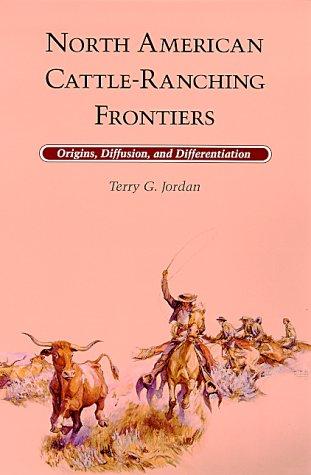
North American Cattle-Ranching Frontiers
0
0
As an Amazon Associate and affiliate partner, Menrva Books earns from qualifying purchases. Learn more
Author Description
Cattle ranching in the Old World and New is reinterpreted in this pathbreaking study that both recasts the history of a well-known topic and is also truly original. Jordan begins by tracing how different cattle-raising cultures in Spain, the British Isles, and North Africa helped shape varieties of ranching in the New World. He then delineates the American adaptations of ranching beginning with European expansion into the Caribbean and then considers continued evolution in Mexico, the American South, and the West. By 1850, three distinct ranching cultures existed - Midwestern, Californian, and Texan. Jordan argues that over the next fifty years the Midwestern system triumphed over its two rivals throughout the West. In particular, the role of Texas is depicted as less important than previously thought. The reinterpretation of how ranching evolved in the New World is broad, including discussions of grazing and foraging and their relation to vegetation and climate - that is, cultural ecology - cultural diffusion, and local innovation. Above all, Jordan emphasizes place and region, illustrating the great variety of ranching practices.
Menrva's Summary
THE THESIS
This study reinterprets the history of cattle ranching by tracing its Old World origins and New World adaptations, arguing for the eventual triumph of the Midwestern system over Californian and Texan cultures. The author, drawing on extensive research into cultural ecology, diffusion, and local innovation, details how European cattle-raising traditions from Spain, the British Isles, and North Africa influenced early ranching practices in the Caribbean, Mexico, the American South, and the West. By 1850, distinct regional systems had emerged, but the subsequent fifty years saw the Midwestern model become dominant across the West, challenging previous assumptions about the centrality of Texas in this evolution. The work emphasizes the importance of place and region, highlighting the diverse practices that characterized cattle ranching across North America.
THE SCOPE MAP
- Tracing the influence of Old World cattle-raising cultures (Spain, British Isles, North Africa) on New World ranching.
- Delineating the evolution of American ranching from the Caribbean through Mexico, the American South, and the West.
- Analysis of distinct ranching cultures by 1850: Midwestern, Californian, and Texan.
- Argument for the eventual triumph of the Midwestern ranching system over its rivals in the West.
- Exploration of cultural ecology, cultural diffusion, and local innovation in ranching practices.
- Emphasis on regional diversity and the importance of place in shaping ranching traditions.
- Reassessment of the historical significance of Texas in the development of North American cattle ranching.
THE AUTHORITY PERSPECTIVE
This pathbreaking study is recognized for its original reinterpretation of cattle ranching history, offering a broad perspective that integrates cultural ecology and regional analysis. The author's argument regarding the Midwestern system's dominance challenges established narratives, particularly concerning the role of Texas. The work is noted for its detailed tracing of Old World influences and their subsequent adaptations across various New World frontiers. It provides a nuanced understanding of the diverse practices and regional variations that defined cattle ranching in North America.
Page Count:
439
Publication Date:
1993-01-01
ISBN-10:
082631421X
History
Non-Fiction
Cultural History
Economic History
Agriculture
Community Tags
Similar Books