Author Description
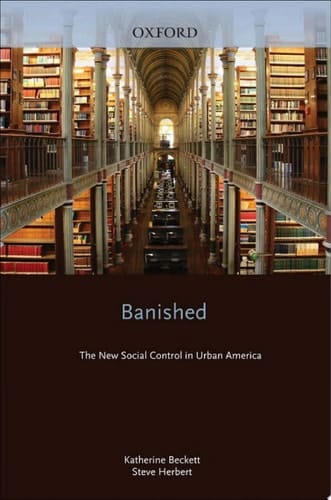
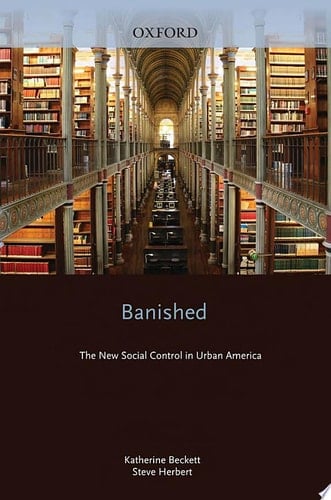
With Urban Poverty Rising And Affordable Housing Disappearing, The Homeless And Other Disorderly People Continue To Occupy Public Space In Many American Cities. Concerned About The Alleged Ill Effects Their Presence Inflicts On Property Values And Public Safety, Many Cities Have Wholeheartedly Embraced Zero-tolerance Or Broken Window Policing Efforts To Clear The Streets Of Unwanted People. Through An Almost Completely Unnoticed Set Of Practices, These People Are Banned From Occupying Certain Spaces. Once Zoned Out, They Are Subject To Arrest If They Return-effectively Banished From Public Places. Banished Is The First Exploration Of These New Tactics That Dramatically Enhance The Power Of The Police To Monitor And Arrest Thousands Of City Dwellers. Drawing Upon An Extensive Body Of Data, The Authors Chart The Rise Of Banishment In Seattle, A City On The Leading Edge Of This Emerging Trend, To Establish How It Works And Explore Its Ramifications. They Demonstrate That, Although The Practice Allows Police And Public Officials To Appear Responsive To Concerns About Urban Disorder, It Is A Highly Questionable Policy: It Is Expensive, Does Not Reduce Crime, And Does Not Address The Underlying Conditions That Generate Urban Poverty. Moreover, Interviews With The Banished Themselves Reveal That Exclusion Makes Their Lives And Their Path To Self-sufficiency Immeasurably More Difficult. At A Time When More And More Cities And Governments In The U.s. And Europe Resort To The Criminal Justice System To Solve Complex Social Problems, Banished Provides A Vital And Timely Challenge To Exclusionary Strategies That Diminish The Life Circumstances And Rights Of Those It Targets.
Menrva's Summary
THE THESIS
This book investigates the emergence and societal impact of 'banishment' as a policing strategy used by American cities to remove homeless and disorderly individuals from public spaces. Authors Katherine Beckett and Steve Herbert, both established scholars in sociology and law, utilize a rigorous framework of urban policy analysis to examine how zero-tolerance policing affects marginalized populations. They argue that these exclusionary tactics prioritize the appearance of order over the actual resolution of urban poverty, ultimately failing to reduce crime while exacerbating the instability of the individuals targeted.
THE SCOPE MAP
What You Will Find
- An in-depth case study of Seattle as a primary site for the implementation of banishment policies.
- Analysis of the legal and procedural mechanisms that allow police to restrict access to public spaces.
- Qualitative data derived from interviews with individuals who have been subjected to banishment orders.
- A critical evaluation of the economic and social costs associated with using the criminal justice system to manage urban disorder.
THE AUTHORITY PERSPECTIVE
Experts in urban sociology and criminal justice recognize this work as a foundational text for understanding the intersection of poverty and policing in modern cities. Readers frequently note the clarity of the authors' arguments and the significant weight of the empirical evidence presented regarding the failure of exclusionary policies.
Page Count:
216
Publication Date:
2009-01-01
Publisher:
Oxford University Press
ISBN-10:
0199741344
ISBN-13:
9780199741342
Social justice
Criminology
Urban Studies
Public Policy
Sociology
Community Tags
Similar Books