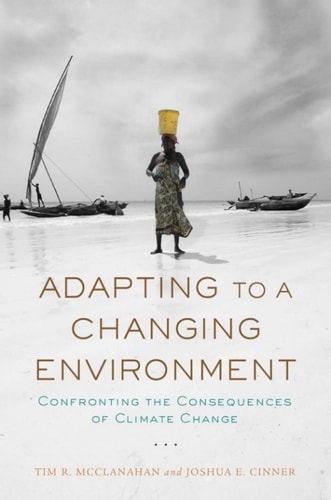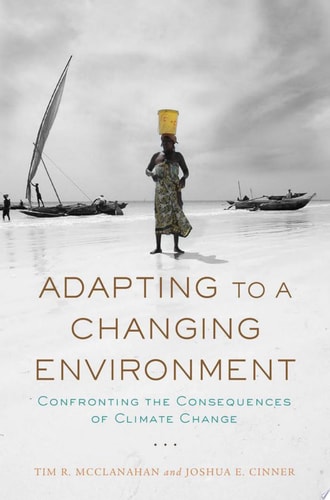
Adapting to a Changing Environment: Confronting the Consequences of Climate Change
0
0
As an Amazon Associate and affiliate partner, Menrva Books earns from qualifying purchases. Learn more
Author Description
For those who depend on the bounty of the sea for their livelihoods, climate change and its consequences (warming water, coral bleaching, rising sea levels) could spell disaster. The region comprising the eastern coastline of Africa and the islands of the western Indian Ocean--home to many of the Earth's most impoverished people--is particularly vulnerable to significant climate impacts.Focusing on coral reef fisheries in these areas, which collectively support millions of people, this book provides a tool box of options for confronting the consequences of climate change through building local-scale adaptive capacity and improving the condition of natural resources. This requires strengthening a society's flexibility, assets, learning, and social organizations, as well as restricting or limiting its resource use. These two broad concepts--building social capacity and limiting certain types of resource use--interact in complicated ways, requiring coordinated actions. The authors argue that adaptation solutions are context dependent, determined in part by local resource conditions, human adaptive capacity, and exposure to climate change impacts, but also by a people's history, culture, and aspirations.Providing an up-to-date and original synthesis of environmental stress, natural resources, and the socioeconomics of climate change, Adapting to a Changing Environment develops a framework to provide governments, scientists, managers, and donors with critical information about local context, encouraging the implementation of nuanced actions that reflect local conditions.
Menrva's Summary
THE THESIS
This book investigates how coastal communities in the western Indian Ocean can build adaptive capacity to mitigate the severe socioeconomic and ecological impacts of climate change on coral reef fisheries. Joshua Cinner and Tim R. McClanahan, both established experts in marine resource management and social-ecological systems, synthesize extensive field research to argue that adaptation strategies must be context-dependent. They propose a dual-framework approach that balances the strengthening of local social organizations with the strategic limitation of resource extraction to ensure long-term viability for vulnerable populations.
THE SCOPE MAP
What You Will Find
- Analysis of climate impacts including coral bleaching, warming waters, and rising sea levels on East African and Indian Ocean fisheries.
- A comprehensive toolbox for building local-scale adaptive capacity through social and institutional reform.
- Examination of the interplay between human history, cultural aspirations, and environmental exposure.
- Methodologies for governments and donors to implement nuanced, site-specific management policies.
THE AUTHORITY PERSPECTIVE
Experts recognize this work as a foundational text for understanding the intersection of marine ecology and human socioeconomic development in the Global South. Readers frequently note the academic density of the prose, which serves as a practical guide for policy makers and environmental scientists tasked with managing fragile coastal ecosystems.
Page Count:
208
Publication Date:
2011-11-28
Publisher:
Oxford University Press
ISBN-10:
0199754489
ISBN-13:
9780199754489
Economics
Climatic changes
Climate Change
Sociology
Sustainability
Marine Biology