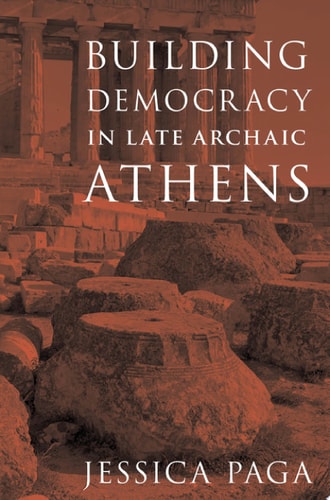
Building Democracy in Late Archaic Athens
0
0
As an Amazon Associate and affiliate partner, Menrva Books earns from qualifying purchases. Learn more
Author Description
In 508/7 B.c.e., After Years Of Chaos And Uncertainty, The City Of Athens Was Rocked By A Momentous Occurrence: The Passage Of A Series Of Reforms That Resulted In What Has Come To Be Known As The World's First Democracy. Exactly How The Athenians Did This Is Still A Fundamental Question 2,500 Years Later. The Results Of The Reforms Transformed The Very Nature Of What It Meant To Be Athenian And Their Far-reaching Effects Would Come To Leave Their Mark On Nearly Every Aspect Of Society, Including The Structures At Which They Prayed And In Which They Debated Legislation. By Attending To The Built Environment Broadly, And Monumental Architecture Specifically, This Book Investigates The Built Environment Of Ancient Athens Precisely During This Time, The Late Archaic Period (ca. 514/13 - 480/79 B.c.e.). It Was These Decades, Filled With Transition And Disorder, When The Athenians Transformed Their Political System From A Tyranny To A Democracy. Concurrent With The Socio-political Changes, They Altered The Physical Landscape And Undertook The Monumental Articulation Of The City And Countryside. Interpreting The Nature Of The Fledgling Democracy From A Material Standpoint, This Book Approaches The Questions And Problems Of The Early Political System Through The Lens Of Buildings. The Focus On Monumental Structures Erected During This Particular Time Period Demonstrates How The Built Environment Worked To Facilitate The Functioning Of The Nascent Political Regime. While Athenian Democracy--its Institutions, Ideology, And Capabilities--has Been Intensively Studied, Little Attention Has Been Paid To The Intersection Between Built Structures And The Political System During Its Earliest Phases. This Book Draws Attention To A Pivotal Period Of Athenian Political History Through The Built Environment, Thereby Exposing The Richness Of The Material Record And Illustrating How It Participated In The Creation Of A New Democratic Athenian Identity.
Menrva's Summary
THE THESIS
How did the physical transformation of the Athenian landscape facilitate the transition from tyranny to the world's first democracy during the Late Archaic period? Jessica Paga, an expert in classical archaeology and architecture, examines the intersection of socio-political reform and monumental construction between 514/13 and 480/79 B.C.E. By analyzing the material record of the city and its surrounding countryside, the author argues that the built environment was not merely a backdrop for political change but an active participant in shaping the new democratic identity of Athens.
THE SCOPE MAP
What You Will Find
- Analysis of monumental architecture in Athens and the surrounding Attic countryside during the Late Archaic period.
- A framework for interpreting political institutional change through the lens of urban planning and construction.
- Examination of the relationship between civic space and the development of democratic ideology.
Scope Limits
- The study is strictly confined to the Late Archaic period (ca. 514/13 - 480/79 B.C.E.) and does not cover the subsequent Classical or Hellenistic architectural developments.
- The text focuses primarily on monumental structures rather than domestic or private architecture.
THE AUTHORITY PERSPECTIVE
Scholars and historians recognize this work as a significant contribution to the study of Athenian political evolution through material culture. Readers frequently note the academic density of the prose, which provides a rigorous analysis of archaeological evidence for students and researchers of the ancient world.
Page Count:
400
Publication Date:
2020-01-01
Publisher:
Oxford University Press
ISBN-10:
0190083581
ISBN-13:
9780190083588
Architecture
History
Ancient Greece
Archaeology
Political History
Community Tags
Other Editions(4)
Similar Books



Reader Comments
Share Your Thoughts
No comments yet. Be the first to share your thoughts!