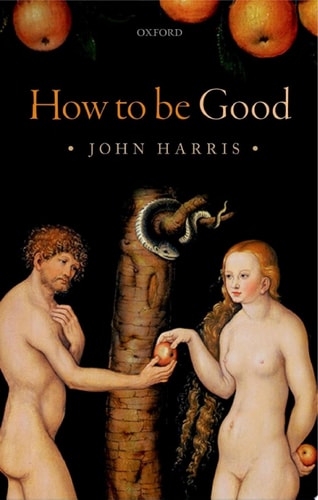
How to be Good: The Possibility of Moral Enhancement
0
0
As an Amazon Associate and affiliate partner, Menrva Books earns from qualifying purchases. Learn more
Author Description
'How to be Good?' is the pre-eminent question for ethics, although one that philosophers and ethicists seldom address head on. Knowing how to be good, or perhaps (more modestly and more accurately) knowing how to go about trying to be good, and the ways in which it is pointless or self-defeating to try to be good, is of immense theoretical and practical importance. And what goes for trying to be good oneself, goes also for trying to provide others with ways of being good, and for trying to make them good whether they like it or not. This is what is meant by 'moral enhancement'. There are many proposed methodologies or technologies for moral enhancement. Some of them are ancient and/or familiar: we may attempt moral enhancement by setting a good example, by good parenting, by education or training, by peer pressure, by telling stories with a moral, in words or in pictures, and so on. We can imbibe substances with mood changing or motivational effects. We can also use medical, biological, or other scientific means; we can search for and deploy chemicals, or biological or molecular agents, which we believe will change people for the better; and we can modify the environment to make bad outcomes of all sorts less likely. We can experiment with political and social systems, institutions, and arrangements designed to make the world a better place or people better people. The question whether and to what extent moral enhancement is possible is the subject of this book.
Menrva's Summary
THE THESIS
This book investigates the theoretical and practical feasibility of moral enhancement, questioning whether human behavior can or should be intentionally improved through various methodologies. John B. Harris, a prominent bioethicist, examines the intersection of traditional moral development and modern scientific intervention. He argues that while the desire to be good is central to human ethics, the methods used to achieve this—ranging from education to biological modification—require rigorous scrutiny regarding their efficacy and ethical implications.
THE SCOPE MAP
What You Will Find
- Analysis of traditional moral enhancement methods like education, parenting, and storytelling.
- Examination of modern biotechnological and pharmacological interventions for behavioral change.
- Discussion of political and institutional frameworks designed to influence human conduct.
Scope Limits
- The text does not provide a definitive moral code or a singular prescriptive guide for personal conduct.
- It avoids exhaustive clinical data on specific pharmaceutical agents, focusing instead on the philosophical implications of their use.
THE AUTHORITY PERSPECTIVE
Experts in bioethics frequently cite this work as a foundational text for understanding the philosophical tensions inherent in human enhancement. Readers often note the academic density of the prose, which requires a strong background in ethical theory to fully grasp the author's arguments.
Page Count:
209
Publication Date:
2016-01-01
Publisher:
OUP Oxford
ISBN-10:
0191017248
ISBN-13:
9780191017247
Philosophy
Science and Society
Good & Evil
Ethics
Bioethics
Moral Philosophy
Community Tags
Similar Books