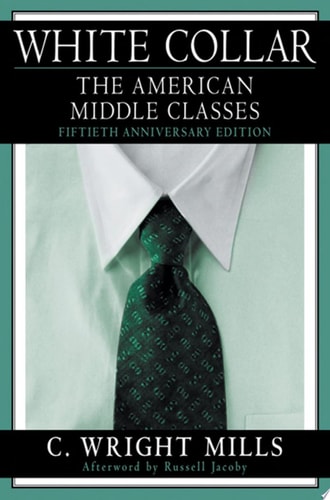
White Collar
0
0
As an Amazon Associate and affiliate partner, Menrva Books earns from qualifying purchases. Learn more
Author Description
In Print For Fifty Years, White Collar By C. Wright Mills Is Considered A Standard On The Subject Of The New Middle Class In Twentieth-century America. This Landmark Volume Demonstrates How The Conditions And Styles Of Middle Class Life--originating From Elements Of Both The Newer Lower And Upper Classes--represent Modern Society As A Whole. By Examining White-collar Life, Mills Aimed To Learn Something About What Was Becoming More Typically American Than The Once-famous Western Frontier Character. He Painted A Picture Instead Of A Society That Had Evolved Into A Business-based Milieu, Viewing America Instead As A Great Salesroom, An Enormous File, And A New Universe Of Management. Russell Jacoby, Author Of The End Of Utopia And The Last Intellectuals, Contributes A New Afterword To This Edition, In Which He Reflects On The Impact White Collar Had At Its Original Publication And Considers What It Means To Our Society Today. A Book That Persons Of Every Level Of The White Collar Pyramid Should Read And Ponder. It Will Alert Them To Their Condition For Their Better Salvation.-horace M. Kaellen, The New York Times (on The First Edition)
Menrva's Summary
THE THESIS
How does the emergence of the white-collar worker define the structural and cultural transformation of twentieth-century American society? C. Wright Mills, a prominent sociologist, utilizes historical analysis and sociological observation to argue that the rise of the middle class represents a fundamental shift in the American identity. He posits that the transition from a frontier-based society to a business-oriented milieu has created a new universe of management, fundamentally altering the nature of individual autonomy and social status.
THE SCOPE MAP
What You Will Find
- Analysis of the shifting social strata in mid-twentieth-century America
- Examination of the workplace as a 'great salesroom' and 'enormous file'
- Sociological critique of the professional and managerial classes
- Historical context regarding the decline of the independent entrepreneur
THE AUTHORITY PERSPECTIVE
Experts and sociologists recognize this work as a foundational text for understanding the evolution of the American middle class. Readers frequently note the academic density of the prose and the enduring relevance of Mills's critique regarding modern bureaucratic structures.
Page Count:
416
Publication Date:
2002-01-01
Publisher:
Oxford University Press
ISBN-10:
0199763585
ISBN-13:
9780199763580
Economics
Sociology
American History
Social Science
Labor Studies
Community Tags
Similar Books