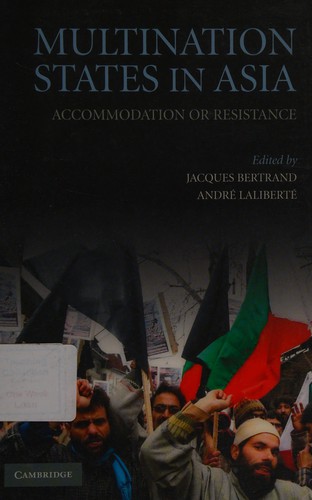
Multination States in Asia
0
0
As an Amazon Associate and affiliate partner, Menrva Books earns from qualifying purchases. Learn more
Author Description
As countries in Asia try to create unified polities, many face challenges from minority groups within their own borders seeking independence. This volume brings together international experts on countries in all regions of Asia to debate how differently they have responded to this problem. Why have some Asian countries, for example, clamped down on their national minorities in favour of homogeneity, whereas others have been willing to accommodate statehood or at least some form of political autonomy? Together they suggest broad patterns and explanatory factors that are rooted in the domestic arena, including state structure and regime type, as well as historical trajectories. In particular, they find that the paths to independence, as well as the cultural elements that have been selected to define post-colonial identities, have decisively influenced state strategies. This is a global phenomenon - and the book explains the broader theoretical and political implications - but violence and ethnic unrest have been particularly prevalent in Asia, and this is as true of China in its relationship to Tibet, as of Burma and Sri Lanka in relation to their national minorities. As the first book to analyse this phenomenon across Asia, it will attract a readership of students and scholars across a broad range of disciplines
Menrva's Summary
THE THESIS
This volume investigates the diverse strategies employed by Asian nations in managing internal minority groups seeking independence. The book brings together international experts to analyze why some states opt for homogeneity while others grant autonomy, exploring factors such as state structure, regime type, and historical trajectories. It highlights how paths to independence and the construction of post-colonial identities have shaped state responses. The analysis extends to the broader theoretical and political implications of this global phenomenon, with a particular focus on the prevalence of violence and ethnic unrest in Asia, citing examples like China's relationship with Tibet and Burma and Sri Lanka's struggles with their national minorities.
THE SCOPE MAP
- Analysis of state responses to minority independence movements across Asia.
- Exploration of factors influencing state strategies: state structure, regime type, historical trajectories.
- Examination of the role of post-colonial identity formation in state-minority relations.
- Comparative study of accommodation versus homogeneity-seeking policies.
- Case studies of ethnic unrest and violence in various Asian countries.
- Discussion of theoretical and political implications of multination states in Asia.
THE AUTHORITY PERSPECTIVE
This book is presented as the first comprehensive analysis of multination states and minority independence movements across Asia. The collection of international experts suggests broad patterns and explanatory factors rooted in domestic arenas. It aims to attract a readership across a broad range of disciplines, including students and scholars of politics, history, and sociology. The work promises to explain the theoretical and political implications of this phenomenon, particularly its manifestation through violence and ethnic unrest in the region.
Page Count:
330
Publication Date:
2010-01-01
ISBN-10:
0521194342
ISBN-13:
9780521194341
History
Science
Politics
Non-Fiction
Sociology
Community Tags
Similar Books