Two Tales of the Death of God
0
0
As an Amazon Associate and affiliate partner, Menrva Books earns from qualifying purchases. Learn more
Author Description
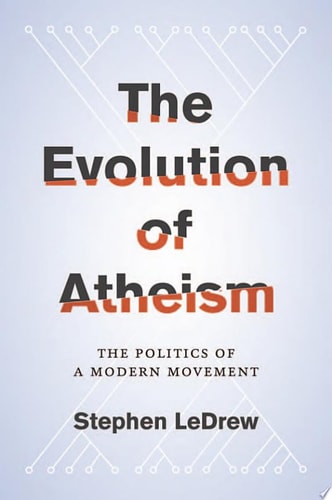
In the 19th century Friedrich Nietzsche infamously declared that "God is dead." It turns out he was on to something. Across the western world, churches are emptying out and closing their doors, and more and more people are rejecting organized religion.In the early 2000s a group of intellectuals who collectively came to be known as the "new atheists" capitalized on this fact, capturing the imagination of young skeptics and igniting a movement for secularism by arguing that religion is the source of most of our social ills. They believed that the decline of religious belief could be attributed to the rise of modern science. This was only the most recent incarnation of a story that has been told since the 18th century Enlightenment, which forged a myth of social progress and western cultural supremacy that has lent legitimacy to the projects of imperialism and global capitalism ever since.The social sciences have another story to tell. It is the story of secularization: a theory that grapples with the astonishing fact of Christianity's fall from its position at the center of western culture. In this version of the story, God was not killed by science, but by a complex set of social and economic changes that have produced greater overall well-being and equality, and by shifting moral values that lead people to view religious ethics as a relic of a bygone era.Stephen LeDrew argues that only the social sciences can explain religion's fall from grace--and the dangers of its resurgence. A coalition of far-right religious extremists is currently working to dismantle democracy in order to preserve white Christian privilege. The evidence from secularization shows that only by working to achieve greater security and equality for all can we halt a descent into an abyss of nihilistic greed and intolerance.
Menrva's Summary
THE THESIS
This book investigates the decline of religious influence in Western society by contrasting the popular narrative of the 'New Atheists' with the sociological theory of secularization. Stephen LeDrew, a sociologist, utilizes historical data and social science frameworks to argue that the retreat of religion is not a product of scientific advancement, but rather a consequence of complex socio-economic shifts. He posits that understanding these structural changes is vital to addressing contemporary threats to democracy posed by far-right religious movements.
THE SCOPE MAP
What You Will Find
- Analysis of the 'New Atheist' movement and its historical roots in Enlightenment thought.
- Sociological theories of secularization and their relationship to economic well-being.
- Examination of the intersection between religious extremism and political instability.
Scope Limits
- The text does not provide a comprehensive history of theology or religious doctrine.
- It does not offer a detailed theological defense of religious belief.
THE AUTHORITY PERSPECTIVE
Readers frequently note the analytical rigor with which LeDrew approaches the intersection of sociology and political discourse. Experts highlight this as a significant contribution to understanding the modern decline of religious institutions and the subsequent rise of reactionary political movements.
Page Count:
192
Publication Date:
2024-01-01
Publisher:
Oxford University Press
ISBN-10:
0190086882
ISBN-13:
9780190086886
Religion
Philosophy
Secularism
Sociology
Community Tags
Other Editions(2)

Similar Books