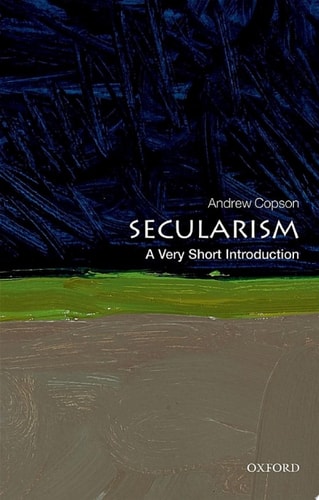
Secularism: A Very Short Introduction
0
0
As an Amazon Associate and affiliate partner, Menrva Books earns from qualifying purchases. Learn more
Author Description
Until the modern period the integration of church (or other religion) and state (or political life) had been taken for granted. The political order was always tied to an official religion in Christian Europe, pre-Christian Europe, and in the Arabic world. But from the eighteenth century onwards, some European states began to set up their political order on a different basis. Not religion, but the rule of law through non-religious values embedded in constitutions became the foundation of some states - a movement we now call secularism. In others, a de facto secularism emerged as political values and civil and criminal law altered their professed foundation from a shared religion to a non-religious basis. Today secularism is an increasingly hot topic in public, political, and religious debate across the globe. It is embodied in the conflict between secular republics - from the US to India - and the challenges they face from resurgent religious identity politics; in the challenges faced by religious states like those of the Arab world from insurgent secularists; and in states like China where calls for freedom of belief are challenging a state imposed non-religious worldview. In this Very Short Introduction Andrew Copson tells the story of secularism, taking in momentous episodes in world history, such as the great transition of Europe from religious orthodoxy to pluralism, the global struggle for human rights and democracy, and the origins of modernity. He also considers the role of secularism when engaging with some of the most contentious political and legal issues of our time: 'blasphemy', 'apostasy', religious persecution, religious discrimination, religious schools, and freedom of belief and freedom of thought in a divided world. Previously published in hardback as Secularism: Politics, Religion, and Freedom ABOUT THE SERIES: The Very Short Introductions series from Oxford University Press contains hundreds of titles in almost every subject area. These pocket-siz
Menrva's Summary
THE THESIS
This book investigates the historical development, philosophical foundations, and contemporary political relevance of secularism as a framework for state governance. Andrew Copson, Chief Executive of Humanists UK, utilizes historical analysis and comparative political theory to argue that secularism is not merely the absence of religion, but a distinct system of law and values designed to protect freedom of belief and equality for all citizens. He examines the transition from religious orthodoxy to pluralism to demonstrate how secular principles function within modern democratic and non-democratic states.
THE SCOPE MAP
What You Will Find
- Historical analysis of the transition from state-integrated religion to secular constitutionalism.
- Comparative study of secular republics versus religious states and state-imposed non-religious systems.
- Examination of legal and political issues including blasphemy, apostasy, and religious discrimination.
Scope Limits
- The text does not provide an exhaustive theological critique of specific religions.
- It does not offer a comprehensive legal manual for every individual nation-state's constitution.
THE AUTHORITY PERSPECTIVE
Readers frequently note the clarity and accessibility of the prose, which distills complex political history into a concise format. Experts highlight this as a foundational text for students and general readers seeking to understand the mechanics of secular governance in a global context.
Page Count:
160
Publication Date:
2019-01-01
Publisher:
OUP Oxford
ISBN-10:
0191064319
ISBN-13:
9780191064319
Religion
Philosophy
History
Sociology
Secularism
American Religions
Community Tags
Other Editions(2)

Similar Books






Reader Comments
Share Your Thoughts
No comments yet. Be the first to share your thoughts!