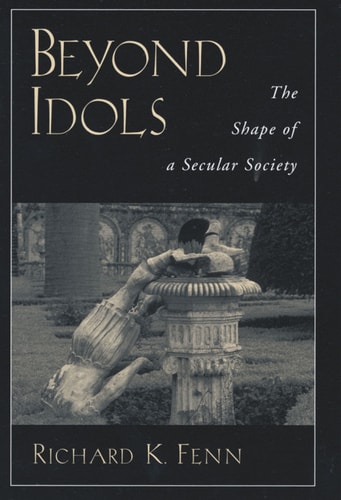
Beyond Idols: The Shape of a Secular Society
0
0
As an Amazon Associate and affiliate partner, Menrva Books earns from qualifying purchases. Learn more
Author Description
This book attempts to articulate the nature of a secular society, describe its benefits, and suggests the conditions under which such a society could emerge. To become secular, argues Fenn, is to open oneself and one's society to a wide range of possibilities, some interesting and exciting, some burdensome and dreadful. While some sociologists have argued that a "Civil Religion" is necessary to hold together our newly "religionless" society, Fenn urges that there is nothing to fear--and everything to gain--from living in a society that is not bound together by sacred memories and beliefs, or by sacred institutions and practices.
Menrva's Summary
THE THESIS
This book investigates the structural and social requirements for a functional secular society, arguing that the absence of traditional religious institutions does not necessitate a decline in social cohesion. Richard K. Fenn, a sociologist specializing in the intersection of religion and society, utilizes historical and sociological frameworks to challenge the necessity of a "Civil Religion." He posits that a society liberated from sacred mandates can embrace a broader spectrum of human experience and institutional flexibility.
THE SCOPE MAP
What You Will Find
- Analysis of the transition from religious to secular social structures
- Critique of the "Civil Religion" theory in modern sociology
- Examination of the psychological and institutional implications of secularization
Scope Limits
- Does not provide a prescriptive policy manual for governance
- Does not focus on the history of specific religious denominations
THE AUTHORITY PERSPECTIVE
Scholars in the field of sociology of religion frequently cite this work for its provocative stance against the necessity of sacred institutions in modern life. Readers often note the academic density of the prose, which requires a foundational understanding of sociological theory to fully grasp the author's arguments.
Page Count:
206
Publication Date:
2001-01-01
Publisher:
Oxford University Press
ISBN-10:
0190286733
ISBN-13:
9780190286736
Religion
Philosophy
Social Theory
Sociology
Secularism
Community Tags
Similar Books