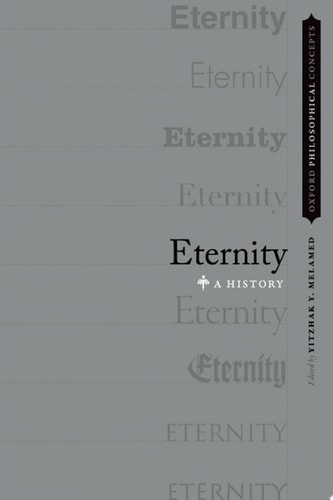
Eternity
0
0
As an Amazon Associate and affiliate partner, Menrva Books earns from qualifying purchases. Learn more
Author Description
Eternity Is A Unique Kind Of Existence That Is Supposed To Belong To The Most Real Being Or Beings. It Is An Existence That Is Not Shaken By The Common Wear And Tear Of Time. Over The Two And Half Millennia History Of Western Philosophy We Find Various Conceptions Of Eternity, Yet One Sharp Distinction Between Two Notions Of Eternity Seems To Run Throughout This Long History: Eternity As Timeless Existence, As Opposed To Eternity As Existence In All Times. Both Kinds Of Existence Stand In Sharp Contrast To The Coming In And Out Of Existence Of Ordinary Beings, Like Hippos, Humans, And Toothbrushes: Were These Eternally-timeless, For Example, A Hippo Could Not Eat, A Human Could Not Think Or Laugh, And A Toothbrush Would Be Of No Use. Were A Hippo An Eternal-everlasting Creature, It Would Not Have To Bother Itself With Nutrition In Order To Extend Its Existence. Everlasting Human Beings Might Appear Similar To Us, But Their Mental Life And Patterns Of Behavior Would Most Likely Be Very Different From Ours. The Distinction Between Eternity As Timelessness And Eternity As Everlastingness Goes Back To Ancient Philosophy, To The Works Of Plato And Aristotle, And Even To The Fragments Of Parmenides' Philosophical Poem. In The Twentieth Century, It Seemed To Go Out Of Favor, Though One Could Consider As Eternalists Those Proponents Of Realism In Philosophy Of Mathematics, And Those Of Timeless Propositions In Philosophy Of Language (i.e., Propositions That Are Said To Exist Independently Of The Uttered Sentences That Convey Their Thought-content). However, Recent Developments In Contemporary Physics And Its Philosophy Have Provided An Impetus To Revive Notions Of Eternity Due To The View That Time And Duration Might Have No Place In The Most Fundamental Ontology. The Importance Of Eternity Is Not Limited To Strictly Philosophical Discussions. It Is A Notion That Also Has An Important Role In Traditional Biblical Interpretation. The Tetragrammaton, The Hebrew Name Of God Co
Menrva's Summary
THE THESIS
This work investigates the fundamental distinction between eternity as timeless existence and eternity as existence in all times, tracing the evolution of these concepts across Western philosophical history. Yitzhak Y. Melamed, a scholar of early modern philosophy, examines how these two notions of eternity have shaped ontological debates from ancient Greek thought to contemporary physics. By contrasting these eternal states with the transient nature of ordinary beings, the author provides a rigorous framework for understanding how different conceptions of duration and existence influence both metaphysical theory and biblical interpretation.
THE SCOPE MAP
What You Will Find
- A historical survey of eternity spanning from Parmenides, Plato, and Aristotle to twentieth-century analytical philosophy.
- A comparative analysis of timelessness versus everlastingness as applied to ontology.
- An examination of the role of eternity in the philosophy of mathematics and language.
- A discussion on the intersection of contemporary physics and the potential absence of time in fundamental reality.
THE AUTHORITY PERSPECTIVE
Experts recognize this text as a precise analytical contribution to the study of metaphysical time and its historical development. Readers frequently note the clarity with which the author navigates complex ontological distinctions while maintaining a focus on the practical implications of these abstract concepts.
Page Count:
256
Publication Date:
2016-01-01
Publisher:
Oxford University Press
ISBN-10:
019978194X
ISBN-13:
9780199781942
Philosophy
Theology
Ontology
Metaphysics
Community Tags
Similar Books