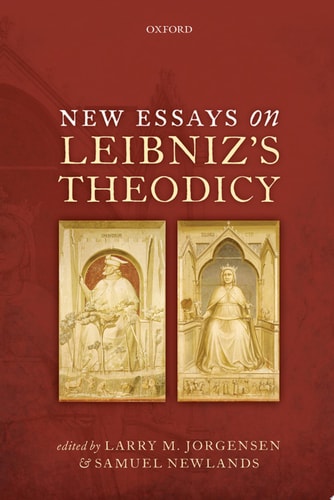
New Essays on Leibniz's Theodicy
0
0
As an Amazon Associate and affiliate partner, Menrva Books earns from qualifying purchases. Learn more
Author Description
In 1710 G. W. Leibniz published Theodicy: Essays on the Goodness of God, the Freedom of Man, and the Origin of Evil. This book, the only one he published in his lifetime, established his reputation more than anything else he wrote. The Theodicy brings together many different strands of Leibniz's own philosophical system, and we get a rare snapshot of how he intended these disparate aspects of his philosophy to come together into a single, overarching account of divine justice in the face of the world's evils. At the same time, the Theodicy is a fascinating window into the context of philosophical theology in the seventeenth century. Leibniz had his finger on the intellectual pulse of his time, and this comes out very clearly in the Theodicy. He engages with all of the major lines of theological dispute of that time, demonstrating the encyclopaedic breadth of his understanding of the issues. Leibniz's Theodicy remains one of the most abiding systematic accounts of how evil is compatible with divine goodness. Any treatment of the problem of evil must, at some point, come to grips with Leibniz's proposed solution. This volume refreshes and deepens our understanding of this great work. Leading scholars present original essays which critically evaluate the Theodicy, providing a window on its historical context and giving close attention to the subtle and enduring philosophical arguments.
Menrva's Summary
THE THESIS
This volume investigates the philosophical and theological coherence of G. W. Leibniz's 1710 work, Theodicy, specifically addressing how his system reconciles the existence of evil with divine goodness. Editors Larry M. Jorgensen and Samuel Newlands curate a collection of original essays from leading scholars to re-examine Leibniz's arguments. The contributors utilize historical context and contemporary analytical methods to evaluate the text's systematic structure and its enduring relevance to the problem of evil. The volume serves to clarify the disparate strands of Leibniz's thought as they converge in his only published book.
THE SCOPE MAP
What You Will Find
- Critical analysis of Leibniz's arguments regarding divine justice and human freedom
- Historical situating of the Theodicy within 17th-century theological disputes
- Examination of the intersection between Leibniz's metaphysics and his moral philosophy
Scope Limits
- The volume does not provide a general introduction to Leibniz's entire philosophical corpus
- It does not offer a comprehensive biography of Leibniz's life
THE AUTHORITY PERSPECTIVE
Scholars and students of early modern philosophy recognize this collection as a significant contribution to the study of Leibnizian thought. Readers frequently note the academic density of the prose, which is intended for those already familiar with the primary text and its historical context.
Page Count:
288
Publication Date:
2014-01-01
Publisher:
OUP Oxford
ISBN-10:
0191635472
ISBN-13:
9780191635472
Philosophy
17th Century
History & Surveys
Theodicy
Metaphysics
Theology
Community Tags
Similar Books