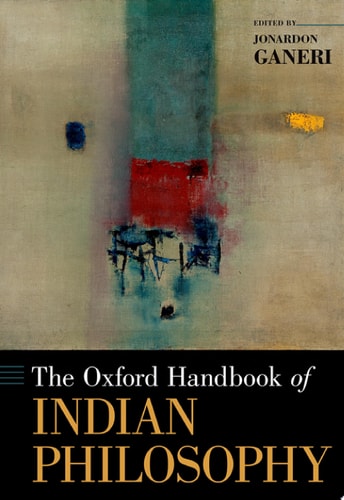
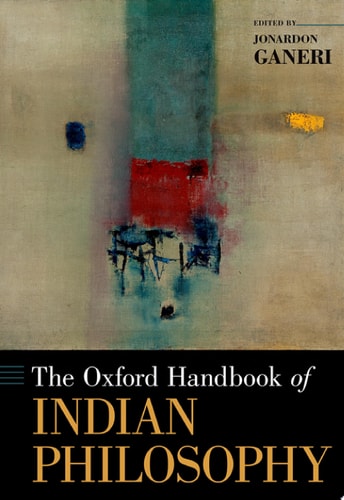
The Oxford Handbook of Indian Philosophy
0
0
As an Amazon Associate and affiliate partner, Menrva Books earns from qualifying purchases. Learn more
Author Description
The Oxford Handbook of Indian Philosophy tells the story of philosophy in India through a series of exceptional individual acts of philosophical virtuosity. It brings together forty leading international scholars to record the diverse figures, movements, and approaches that constitute philosophy in the geographical region of the Indian subcontinent, a region sometimes nowadays designated South Asia. The volume aims to be ecumenical, drawing from different locales, languages, and literary cultures, inclusive of dissenters, heretics and sceptics, of philosophical ideas in thinkers not themselves primarily philosophers, and reflecting India's north-western borders with the Persianate and Arabic worlds, its north-eastern boundaries with Tibet, Nepal, Ladakh and China, as well as the southern and eastern shores that afford maritime links with the lands of Theravda Buddhism. Indian Philosophy has been written in many languages, including Pali, Prakrit, Sanskrit, Malayalam, Urdu, Gujarati, Tamil, Telugu, Bengali, Marathi, Persian, Kannada, Punjabi, Hindi, Tibetan, Arabic and Assamese. From the time of the British colonial occupation, it has also been written in English. It spans philosophy of law, logic, politics, environment and society, but is most strongly associated with wide-ranging discussions in the philosophy of mind and language, epistemology and metaphysics (how we know and what is there to be known), ethics, metaethics and aesthetics, and metaphilosophy. The reach of Indian ideas has been vast, both historically and geographically, and it has been and continues to be a major influence in world philosophy. In the breadth as well as the depth of its philosophical investigation, in the sheer bulk of surviving texts and in the diffusion of its ideas, the philosophical heritage of India easily stands comparison with that of China, Greece, the Latin west, or the Islamic world.
Menrva's Summary
THE THESIS
This volume investigates the historical development, diverse methodologies, and global influence of philosophical traditions originating within the Indian subcontinent. Edited by Jonardon Ganeri, a prominent scholar in the field, the work synthesizes contributions from forty international experts to map the intellectual landscape of South Asia. It argues that Indian philosophy constitutes a vast, multi-lingual, and ecumenical heritage that rivals the depth and historical significance of Greek, Chinese, and Islamic philosophical traditions.
THE SCOPE MAP
What You Will Find
- Comprehensive coverage of philosophical movements across diverse languages including Sanskrit, Pali, Tamil, Persian, and Arabic.
- Analysis of core philosophical domains such as epistemology, metaphysics, ethics, aesthetics, and the philosophy of mind and language.
- Exploration of cross-cultural exchanges between India and neighboring regions like Tibet, Nepal, and the Persianate world.
Scope Limits
- The text focuses primarily on the intellectual history and formal philosophical systems rather than providing a sociological or political history of the region.
- It does not attempt to provide an exhaustive biography of every historical figure, focusing instead on key movements and representative acts of philosophical inquiry.
THE AUTHORITY PERSPECTIVE
Experts recognize this volume as a foundational reference that successfully bridges the gap between traditional Indian scholarship and contemporary global philosophical discourse. Readers frequently note the academic density of the prose, which is intended for advanced students and researchers seeking a rigorous overview of the field.
Page Count:
835
Publication Date:
2017-01-01
Publisher:
Oxford University Press
ISBN-10:
0190668393
ISBN-13:
9780190668396
Philosophy
Eastern
Epistemology
Indian philosophy
Metaphysics
Community Tags
Other Editions(2)
Similar Books










Reader Comments
Share Your Thoughts
No comments yet. Be the first to share your thoughts!