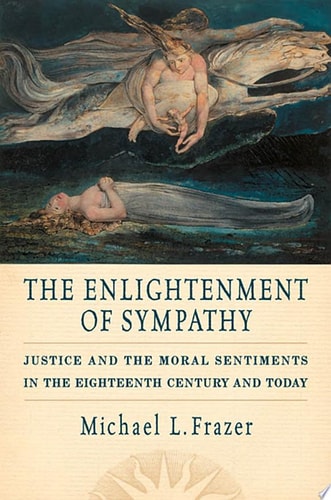
The Enlightenment of Sympathy
0
0
As an Amazon Associate and affiliate partner, Menrva Books earns from qualifying purchases. Learn more
Author Description
The Enlightenment Of Sympathy Reclaims The Sentimentalist Theory Of Reflective Autonomy As A Resource For Enriching Social Science, Normative Theory, And Political Practice Today. The Sentimentalist Description Of The Reflective Process Is More Empirically Accurate Than The Competing Rationalist Description, And Can Guide Scientists Investigating The Processes By Which The Mind Formulates Moral And Political Principles. Yet The Theory Is Much More Than Merely Descriptive, And Can Also Contribute To The Philosophical Project Of Finding Principles--including Principles Of Justice--that Wield Genuine Normative Authority. Enlightenment Sentimentalism Demonstrates That Emotion Is Necessarily Central To Our Civic Life, And Shows How Our Reflective Sentiments Can Counterbalance The Unreflective Feelings That Might Otherwise Lead Our Political Principles Astray.
Menrva's Summary
THE THESIS
This work investigates whether the sentimentalist theory of reflective autonomy can serve as a viable framework for modern social science, normative theory, and political practice. Michael L. Frazer, a scholar in political theory, argues that the Enlightenment-era focus on sentiment provides a more empirically accurate account of human cognition than rationalist alternatives. By synthesizing historical philosophy with contemporary inquiry, the author posits that our reflective sentiments are essential for establishing normative authority and guiding civic life.
THE SCOPE MAP
What You Will Find
- A historical analysis of Enlightenment-era sentimentalist philosophy and its application to modern political theory.
- A comparative framework evaluating the reflective processes of sentimentalism versus rationalism.
- An exploration of how emotional intelligence informs the formulation of moral and political principles.
- Methodological insights for social scientists studying the intersection of human psychology and civic governance.
THE AUTHORITY PERSPECTIVE
Scholars and political theorists frequently cite this text as a significant contribution to the revival of sentimentalist thought in contemporary discourse. Experts highlight the book's ability to bridge the gap between historical philosophical inquiry and the practical requirements of modern political science.
Page Count:
248
Publication Date:
2010-01-01
Publisher:
Oxford University Press
ISBN-10:
0199780218
ISBN-13:
9780199780211
Philosophy
Ethics
Enlightenment
Social Science
Community Tags
Similar Books