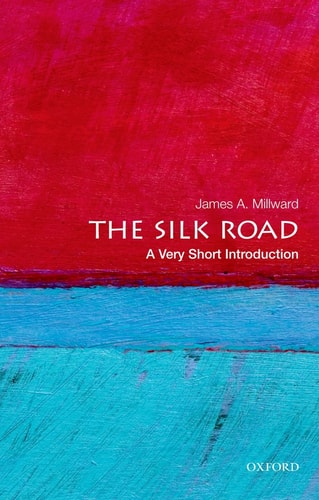
The Silk Road: A Very Short Introduction
0
0
As an Amazon Associate and affiliate partner, Menrva Books earns from qualifying purchases. Learn more
Author Description
The phrase "silk road" evokes vivid scenes of merchants leading camel caravans across vast stretches to trade exotic goods in glittering Oriental bazaars, of pilgrims braving bandits and frozen mountain passes to spread their faith across Asia. Looking at the reality behind these images, this Very Short Introduction illuminates the historical background against which the silk road flourished, shedding light on the importance of old-world cultural exchange to Eurasian and world history.On the one hand, historian James A. Millward treats the silk road broadly, to stand in for the cross-cultural communication between peoples across the Eurasian continent since at least the Neolithic era. On the other, he highlights specific examples of goods and ideas exchanged between the Mediterranean, Persia, India, and China, along with the significance of these exchanges. While including silks, spices, and travelers' tales of colorful locales, the book explains the dynamics of Central Eurasian history that promoted Silk Road interactions--especially the role of nomad empires--highlighting the importance of the biological, technological, artistic, intellectual, and religious interchanges across the continent. Millward shows that these exchanges had a profound effect on the old world that was akin to, if not on the scale of, modern globalization. He also disputes the idea that the silk road declined after the collapse of the Mongol empire or the opening of direct sea routes from Europe to Asia, showing how silk road phenomena continued through the early modern and modern expansion of the Russian and Chinese states across Central Asia.Millward concludes that the idea of the silk road has remained powerful, not only as a popular name for boutiques and restaurants, but also in modern politics and diplomacy, such as U.S. Secretary of State Hilary Clinton's "Silk Road Initiative" for India, Pakistan, and Afghanistan.
Menrva's Summary
THE THESIS
This book investigates the historical reality and enduring legacy of the Silk Road as a vital network for cross-cultural exchange across the Eurasian continent. Historian James A. Millward utilizes his expertise in Central Eurasian history to challenge popular misconceptions about these trade routes. He argues that the Silk Road was not merely a path for luxury goods, but a complex system of biological, technological, and intellectual interaction that functioned as an early form of globalization.
THE SCOPE MAP
What You Will Find
- Historical analysis of Eurasian cross-cultural communication from the Neolithic era to the modern day.
- Examination of the role played by nomadic empires in facilitating continental interaction.
- Discussion of the exchange of religions, artistic techniques, and biological materials alongside traditional trade goods.
- Critique of the traditional narrative regarding the decline of the Silk Road following the Mongol collapse.
THE AUTHORITY PERSPECTIVE
Experts and readers frequently highlight this text as an accessible yet rigorous entry point for understanding the complexities of Eurasian history. The prose is noted for its ability to distill dense historical data into a concise, manageable framework for students and general readers alike.
Page Count:
168
Publication Date:
2013-04-12
Publisher:
Oxford University Press
ISBN-10:
0199782865
ISBN-13:
9780199782864
History
Central Asia
Asian History
Europe
Silk Road
World history
Asia commerce
Trade Routes
Globalization
Community Tags
Other Editions(2)
Similar Books

Reader Comments
Share Your Thoughts
No comments yet. Be the first to share your thoughts!