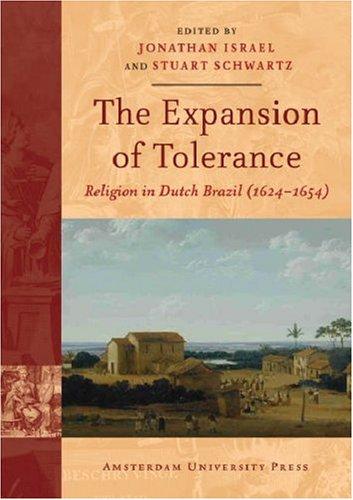
The Expansion of Tolerance
0
0
As an Amazon Associate and affiliate partner, Menrva Books earns from qualifying purchases. Learn more
Author Description
The history of tolerance in the early modern Dutch Republic is a topic that has fascinated generations of scholars, and continues to do so. Tolerance, in the long run, proved to be the best and most pragmatic solution to the problem of religious pluriformity, and, as the seventeenth century progressed, came to be regarded as a political virtue with clear social and, more importantly, economic benefits. Hence the Dutch West India Company exported this tradition of tolerance to its New World colonies, most notable to Dutch Brazil. This volume analyses the unprecedented degree of toleration in the colony known as New Holland between the arrival of the Dutch in 1624 and their surrender to the Portuguese in 1654. Special attention is devoted to the position of Sephardic Jews in Recife and Mauritsstad, and to Portuguese responses to religious tolerance.--BOOK JACKET.
Menrva's Summary
THE THESIS
This volume analyzes the unprecedented degree of religious toleration in Dutch Brazil between 1624 and 1654. The history of tolerance in the early modern Dutch Republic is examined, highlighting its pragmatic solution to religious pluriformity and its perceived social and economic benefits. The book specifically focuses on the Dutch West India Company's export of this tradition to its New World colonies, with particular attention to New Holland. The analysis includes the position of Sephardic Jews in Recife and Mauritsstad, and the Portuguese responses to this religious tolerance.
THE SCOPE MAP
- Analysis of religious toleration in Dutch Brazil (New Holland) from 1624 to 1654.
- Examination of the Dutch West India Company's role in exporting tolerance to its colonies.
- Detailed focus on the Sephardic Jewish community in Recife and Mauritsstad.
- Exploration of Portuguese responses to the prevailing religious tolerance.
- Contextualization of tolerance as a political virtue with social and economic advantages.
- Historical overview of the early modern Dutch Republic's approach to religious pluriformity.
THE AUTHORITY PERSPECTIVE
The book delves into the complex history of tolerance within the Dutch Republic and its extension to colonial territories, particularly Dutch Brazil. It highlights the pragmatic and economic advantages that tolerance offered, making it a key aspect of Dutch colonial policy. The specific focus on the Sephardic Jewish community in Recife and Mauritsstad provides a detailed case study of how tolerance was implemented and perceived in practice. The work contributes to the understanding of religious diversity and its management in early modern colonial settings.
Page Count:
60
Publication Date:
2007-01-01
ISBN-10:
9053569022
ISBN-13:
9789053569023
History
Religion
Non-Fiction
European History
Colonial History
Jewish History
Community Tags
Similar Books