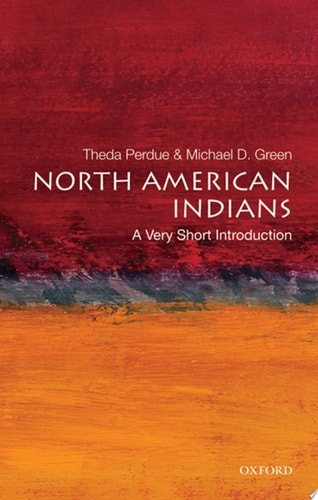
North American Indians: A Very Short Introduction
0
0
As an Amazon Associate and affiliate partner, Menrva Books earns from qualifying purchases. Learn more
Author Description
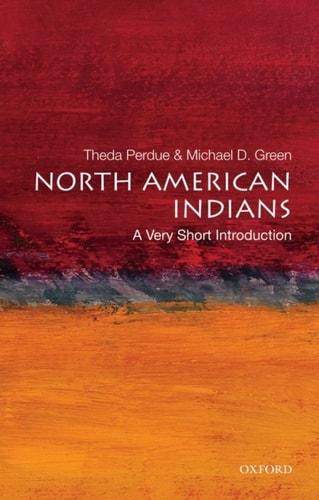
When Europeans first arrived in North America, between five and eight million Indigenous people were already living there. But how did they come to be here? What were their agricultural, spiritual, and hunting practices? How did their societies evolve and what challenges do they face today? Eminent historians Theda Perdue and Michael Green begin by describing how nomadic bands of hunter-gatherers followed the bison and woolly mammoth over the Bering land mass between Asia and what is now Alaska between 25,000 and 15,000 years ago, settling throughout North America. They describe hunting practices among different tribes, how some made the gradual transition to more settled, agricultural ways of life, the role of kinship and cooperation in Native societies, their varied burial rites and spiritual practices, and many other features of Native American life. Throughout the book, Perdue and Green stress the great diversity of Indigenous peoples in America, who spoke more than 400 different languages before the arrival of Europeans and whose ways of life varied according to the environments they settled in and adapted to so successfully. Most importantly, the authors stress how Native Americans have struggled to maintain their sovereignty--first with European powers and then with the United States--in order to retain their lands, govern themselves, support their people, and pursue practices that have made their lives meaningful. Going beyond the stereotypes that so often distort our views of Native Americans, this Very Short Introduction offers a historically accurate, deeply engaging, and often inspiring account of the wide array of Native peoples in America.
Menrva's Summary
THE THESIS
This work investigates the historical development, cultural diversity, and ongoing struggle for sovereignty among Indigenous peoples in North America. Theda Perdue and Michael Green, both distinguished historians in the field of Native American studies, utilize archaeological evidence, anthropological research, and historical records to construct a comprehensive overview. They argue that Native American societies were not static or monolithic, but rather dynamic cultures that adapted to diverse environments while maintaining distinct social, spiritual, and political structures.
THE SCOPE MAP
What You Will Find
- Historical analysis of migration patterns across the Bering land bridge.
- Examination of the transition from nomadic hunter-gatherer societies to settled agricultural communities.
- Comparative study of kinship systems, burial rites, and spiritual practices across various tribes.
- Detailed account of the political struggle for sovereignty against European powers and the United States government.
THE AUTHORITY PERSPECTIVE
Experts and educators frequently cite this text as a foundational, accessible entry point for students and general readers interested in Indigenous history. The prose is noted for its ability to condense complex historical narratives into a concise, authoritative format without sacrificing academic rigor.
Page Count:
160
Publication Date:
2010-01-01
Publisher:
Oxford University Press, Incorporated
ISBN-10:
0199794324
ISBN-13:
9780199794324
History
Sociology
North America
Anthropology
America history
Community Tags
Similar Books