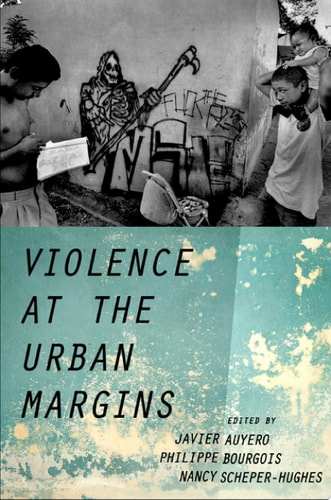
Violence at the Urban Margins
0
0
As an Amazon Associate and affiliate partner, Menrva Books earns from qualifying purchases. Learn more
Author Description
In The Americas, Debates Around Issues Of Citizen's Public Safety--from Debates That Erupt After Highly Publicized Events, Such As The Shootings Of Jordan Davis And Trayvon Martin, To Those That Recurrently Dominate The Airwaves In Latin America--are Dominated By Members Of The Middle And Upper-middle Classes. However, A Cursory Count Of The Victims Of Urban Violence In The Americas Reveals That The People Suffering The Most From Violence Live, And Die, At The Lowest Of The Socio-symbolic Order, At The Margins Of Urban Societies. The Inhabitants Of The Urban Margins Are Hardly Ever Heard In Discussions About Public Safety. They Live In Danger But The Discourse About Violence And Risk Belongs To, Is Manufactured And Manipulated By, Others--others Who Are Prone To View Violence At The Urban Margins As Evidence Of A Cultural, Or Racial, Defect, Rather Than Question Violence's Relationship To Economic And Political Marginalization. As A Result, The Experience Of Interpersonal Violence Among The Urban Poor Becomes Something Unspeakable, And The Everyday Fear And Trauma Lived In Relegated Territories Is Constantly Muted And Denied. This Edited Volume Seeks To Counteract This Pernicious Tendency By Putting Under The Ethnographic Microscope--and Making Public--the Way In Which Violence Is Lived And Acted Upon In The Urban Peripheries. It Features Cutting-edge Ethnographic Research On The Role Of Violence In The Lives Of The Urban Poor In South, Central, And North America, And Sheds Light On The Suffering That Violence Produces And Perpetuates, As Well As The Individual And Collective Responses That Violence Generates, Among Those Living At The Urban Margins Of The Americas.
Menrva's Summary
THE THESIS
This volume investigates how interpersonal violence is experienced, normalized, and interpreted by populations living at the urban margins of the Americas, challenging dominant middle-class narratives regarding public safety. The editors, Javier Auyero, Nancy Scheper-Hughes, and Philippe I. Bourgois, curate a collection of ethnographic studies that examine the structural roots of violence. They argue that violence in these regions is not a product of cultural or racial defects, but rather a direct consequence of systemic economic and political marginalization.
THE SCOPE MAP
What You Will Find
- Ethnographic research conducted in urban peripheries across South, Central, and North America
- Analysis of the relationship between state neglect and interpersonal violence
- Documentation of individual and collective responses to trauma in relegated territories
Scope Limits
- The text does not provide policy prescriptions or legislative solutions for urban safety
- It does not focus on middle-class or elite perspectives of crime
THE AUTHORITY PERSPECTIVE
Scholars and sociologists frequently cite this work as a critical intervention in urban anthropology for its focus on the lived experience of the marginalized. Experts highlight the text for its rigorous ethnographic methodology and its success in centering the voices of those typically excluded from public safety discourse.
Page Count:
352
Publication Date:
2015-01-01
Publisher:
Oxford University Press, Incorporated
ISBN-10:
019022147X
ISBN-13:
9780190221478
America history
Anthropology
Sociology
Urban Studies
South America
Criminology
Social justice
Urban Poor
Violence
Community Tags
Similar Books