
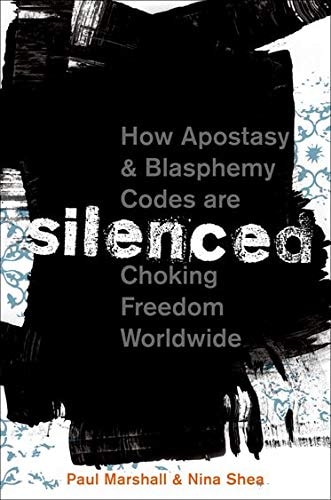
Silenced: How Apostasy and Blasphemy Codes Are Choking Freedom Worldwide
0
0
As an Amazon Associate and affiliate partner, Menrva Books earns from qualifying purchases. Learn more
Author Description
The fatwa against Salman Rushdie awakened many westerners to the danger of being accused of blasphemy in the Muslim world. As this eye-opening volume reveals, accusations of "blasphemy," "apostasy," or "insulting Islam" are increasingly used by authoritarian governments and extremist forces in the Muslim world to acquire and consolidate power. These charges, which traditionally carry a punishment of death, have proved effective in intimidating not only converts and heterodox groups, but also political and religious reformers. In his foreword, the late Indonesian President Wahid observes that coercively applied blasphemy laws "narrow the bounds of acceptable discourse...not only about religion, but about vast spheres of life, literature, science and culture in general."Silenced provides the first survey of such accusations in the contemporary Muslim world, in international organizations, and in the West. The authors describe hundreds of victims, including political dissidents, religious reformers, journalists, writers, artists, movie makers, and religious minorities throughout the Muslim world. They also document the political effects in Muslim societies of blasphemy and apostasy laws, as well as non-governmental fatwas and vigilante violence. Finally, they address the move toward new blasphemy laws in the West and the increasing threat of violence to stifle commentary on Islam in the West even in the absence of law.
Menrva's Summary
THE THESIS
This volume investigates how accusations of blasphemy and apostasy are systematically employed by authoritarian regimes and extremist factions to suppress dissent and consolidate political power. The authors, Nina Shea and Paul Marshall, utilize extensive documentation of legal cases and social trends to argue that these charges function as a mechanism for silencing reformers, journalists, and religious minorities. By examining both governmental laws and non-governmental vigilante actions, the text provides a framework for understanding the erosion of free discourse in the contemporary Muslim world and its encroaching influence in Western societies.
THE SCOPE MAP
What You Will Find
- Analysis of blasphemy and apostasy laws across various Muslim-majority nations.
- Documentation of hundreds of case studies involving political dissidents, writers, and religious minorities.
- Examination of the political consequences of vigilante violence and non-governmental fatwas.
- Assessment of the emerging pressure to implement blasphemy-related restrictions within Western legal and cultural spheres.
THE AUTHORITY PERSPECTIVE
Experts recognize this work as a comprehensive survey of the intersection between religious law and political authoritarianism. Readers frequently note the detailed, evidence-based approach the authors take in documenting the global reach of these restrictive practices.
Page Count:
716
Publication Date:
2014-12-30
Publisher:
Oxford University Press
ISBN-10:
0199812268
ISBN-13:
9780199812264
Religion
Human rights
Apostasy
International relations
Sociology
Censorship
Community Tags
Other Editions(3)

Similar Books
Reader Comments
Share Your Thoughts
No comments yet. Be the first to share your thoughts!