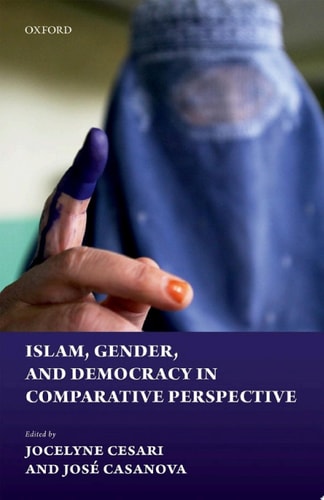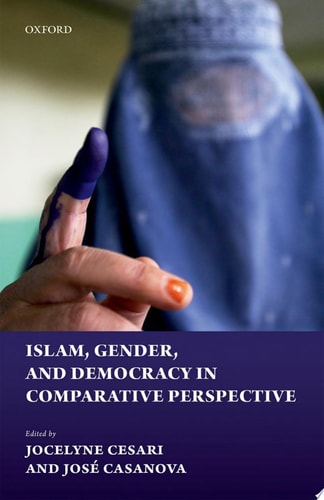
Islam, Gender, and Democracy in Comparative Perspective
0
0
As an Amazon Associate and affiliate partner, Menrva Books earns from qualifying purchases. Learn more
Author Description
The Relationship Between Secularism, Democracy, Religion, And Gender Equality Has Been A Complex One Across Western Democracies And Still Remains Contested. When We Turn To Muslim Countries, The Situation Is Even More Multifaceted. In The Views Of Many Western Commentators, The Question Of Women Rights Is The Litmus Test For Muslim Societies In The Age Of Democracy And Liberalism. Especially Since The Arab Awakening, The Issue Is Usually Framed As The Opposition Between Liberal Advocates Of Secular Democracy And Religious Opponents Of Women's Full Equality. Islam, Gender, And Democracy In Comparative Perspective Critically Re-engages This Too Simple Binary Opposition By Reframing The Debate Around Islam And Women's Rights Within A Broader Comparative Literature. Bringing Together Leading Scholars From A Range Of Disciplines, It Examines The Complex And Contingent Historical Relationships Between Religion, Secularism, Democracy, Law, And Gender Equality. Part One Addresses The Nexus Of Religion, Law, Gender, And Democracy Through Different Disciplinary Perspectives (sociology, Anthropology, Political Science, Law). Part Two Localizes The Implementation Of This Nexus Between Law, Gender, And Democracy And Provides Contextualized Responses To Questions Raised In Part One. The Contributors Explore The Situation Of Muslim Women's Rights In Minority Conditions To Shed Light On The Gender Politics In The Modernization Of The Nation And To Ponder On The Role Of Islam In Gender Inequality Across Different Muslim Countries.
Menrva's Summary
THE THESIS
This work investigates whether the binary opposition between secular liberalism and religious conservatism accurately captures the complexities of gender equality within Muslim-majority societies. The author and contributing scholars utilize historical, sociological, and legal frameworks to challenge the assumption that Islam is inherently incompatible with democratic gender norms. By examining diverse national contexts, the text argues that the relationship between religion, law, and women's rights is contingent upon specific political and social histories rather than static theological mandates.
THE SCOPE MAP
What You Will Find
- Comparative analysis of secularism and religious law in Muslim-majority nations.
- Interdisciplinary perspectives from sociology, anthropology, and political science.
- Case studies examining the implementation of gender rights in both majority and minority Muslim populations.
Scope Limits
- The text does not provide a singular, universal solution for gender inequality in the Islamic world.
- It does not focus on theological debates within Islamic jurisprudence, prioritizing instead the socio-political and legal dimensions.
THE AUTHORITY PERSPECTIVE
Scholars and academics frequently cite this collection as a vital resource for moving beyond reductive narratives regarding Islam and modernity. Readers often note the academic density of the prose, which is best suited for those familiar with comparative political theory and sociology.
Page Count:
512
Publication Date:
2017-01-01
Publisher:
Oxford University Press
ISBN-10:
019109286X
ISBN-13:
9780191092862
Religion
Democracy
Islam
Human rights
Gender Studies
Sociology
Community Tags
Similar Books