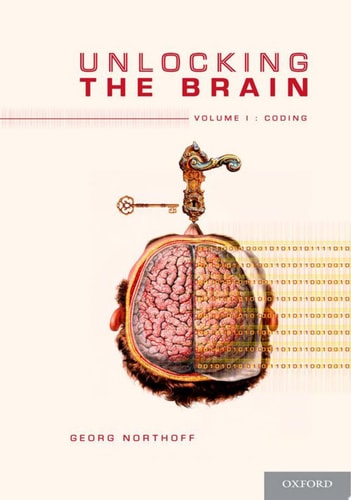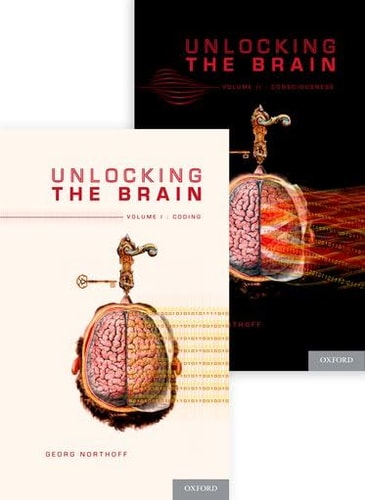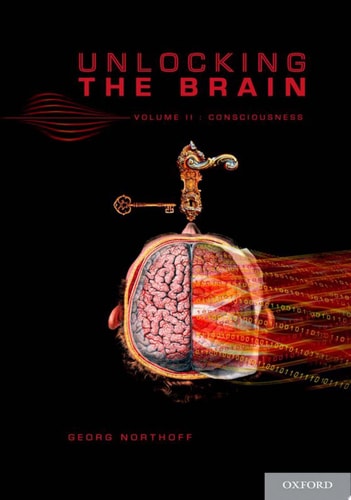
Unlocking the Brain: Volume 2: Consciousness
0
0
As an Amazon Associate and affiliate partner, Menrva Books earns from qualifying purchases. Learn more
Author Description
Neuroscience has made considerable progress in figuring out how the brain works. We know much about the molecular-genetic and biochemical underpinnings of sensory and motor functions. Recent neuroimaging work has opened the door to investigating the neural underpinnings of higher-order cognitive functions, such as memory, attention, and even free will. In these types of investigations, researchers apply specific stimuli to induce neural activity in the brain and look for the function in question. However, there may be more to the brain and its neuronal states than the changes in activity we induce by applying particular external stimuli.In Volume 2 of Unlocking the Brain, Georg Northoff addresses consciousness by hypothesizing about the relationship between particular neuronal mechanisms and the various phenomenal features of consciousness. Northoff puts consciousness in the context of the resting state of the brain thereby delivering a new point of view to the debate that permits very interesting insights into the nature of consciousness. Moreover, he describes and discusses detailed findings from different branches of neuroscience including single cell data, animal data, human imaging data, and psychiatric findings. This yields a unique and novel picture of the brain, and will have a major and lasting impact on neuroscientists working in neuroscience, psychiatry, and related fields.
Menrva's Summary
THE THESIS
This volume investigates the fundamental relationship between neuronal mechanisms and the phenomenal experience of consciousness by shifting the focus from stimulus-induced activity to the brain's resting state. Georg Northoff, a prominent neuroscientist and philosopher, utilizes his dual expertise to bridge the gap between empirical data and theoretical frameworks. By examining the brain as a dynamic system rather than a reactive one, he proposes a model that integrates neuroimaging, psychiatric observations, and cellular data to redefine how consciousness emerges from neural activity.
THE SCOPE MAP
What You Will Find
- Analysis of the brain's resting state as the primary context for consciousness.
- Integration of multi-scale data including single-cell, animal, and human neuroimaging studies.
- Examination of psychiatric findings to explain deviations in conscious experience.
- A theoretical framework linking specific neuronal mechanisms to phenomenal features of consciousness.
THE AUTHORITY PERSPECTIVE
Experts in the field recognize this work as a significant contribution to neuro-philosophy, particularly for its attempt to synthesize complex empirical data into a cohesive theory of consciousness. Readers frequently note the academic density of the prose, which is best suited for researchers and students familiar with advanced neuroscience and cognitive science concepts.
Page Count:
736
Publication Date:
2013-12-09
Publisher:
Oxford University Press
ISBN-10:
0199826994
ISBN-13:
9780199826995
Psychology
Non-Fiction
Science
Neuroscience
Brain
Localization Of Functions
Cognition
Community Tags
Similar Books