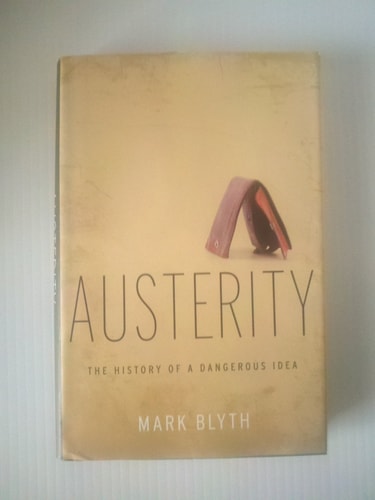
Austerity: The History of a Dangerous Idea
0
0
As an Amazon Associate and affiliate partner, Menrva Books earns from qualifying purchases. Learn more
Author Description
Selected as a Financial Times Best Book of 2013Governments today in both Europe and the United States have succeeded in casting government spending as reckless wastefulness that has made the economy worse. In contrast, they have advanced a policy of draconian budget cuts--austerity--to solve the financial crisis. We are told that we have all lived beyond our means and now need to tighten our belts. This view conveniently forgets where all that debt came from. Not from an orgy of government spending, but as the direct result of bailing out, recapitalizing, and adding liquidity to the broken banking system. Through these actions private debt was rechristened as government debt while those responsible for generating it walked away scot free, placing the blame on the state, and the burden on the taxpayer.That burden now takes the form of a global turn to austerity, the policy of reducing domestic wages and prices to restore competitiveness and balance the budget. The problem, according to political economist Mark Blyth, is that austerity is a very dangerous idea. First of all, it doesn't work. As the past four years and countless historical examples from the last 100 years show, while it makes sense for any one state to try and cut its way to growth, it simply cannot work when all states try it simultaneously: all we do is shrink the economy. In the worst case, austerity policies worsened the Great Depression and created the conditions for seizures of power by the forces responsible for the Second World War: the Nazis and the Japanese military establishment. As Blyth amply demonstrates, the arguments for austerity are tenuous and the evidence thin. Rather than expanding growth and opportunity, the repeated revival of this dead economic idea has almost always led to low growth along with increases in wealth and income inequality. Austerity demolishes the conventional wisdom, marshaling an army of facts to demand that we recognize austerity for what it is, and what it costs.
Menrva's Summary
THE THESIS
This book investigates the historical and economic validity of austerity as a policy response to financial crises, arguing that it is a flawed and dangerous concept. Mark Blyth, a professor of international political economy at Brown University, utilizes a combination of historical analysis and economic data to challenge the prevailing narrative that government debt is primarily the result of excessive public spending. He posits that austerity measures, which focus on cutting budgets and reducing wages, are counterproductive and historically linked to economic stagnation and social instability.
THE SCOPE MAP
What You Will Find
- Historical analysis of economic crises spanning the last century.
- A critique of the transition from private banking debt to public sovereign debt.
- Examination of the fallacy of composition regarding simultaneous global austerity.
- Evidence linking austerity policies to increased wealth and income inequality.
THE AUTHORITY PERSPECTIVE
Experts and critics frequently cite this work as a critical counter-narrative to mainstream economic orthodoxy regarding fiscal policy. Readers often note the accessibility of the prose despite the complex subject matter, making it a standard reference for those seeking to understand the political economy of the post-2008 financial landscape.
Page Count:
304
Publication Date:
2013-04-25
Publisher:
Oxford University Press
ISBN-10:
019982830X
ISBN-13:
9780199828302
Economics
History
Fiscal Policy
Debts Public
Public Policy
Income
Finance
Money & BankingMonetary Theory
Community Tags
Other Editions(2)

Similar Books

Reader Comments
Share Your Thoughts
No comments yet. Be the first to share your thoughts!