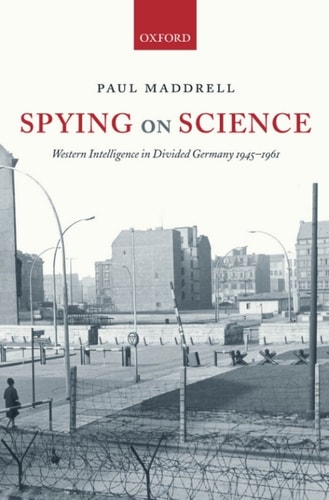
Spying on Science: Western Intelligence in Divided Germany 1945-1961
0
0
As an Amazon Associate and affiliate partner, Menrva Books earns from qualifying purchases. Learn more
Author Description
The years 1945-61 saw the greatest transformation in weaponry that has ever taken place, as atomic and thermonuclear bombs, intercontinental ballistic missiles and chemical and biological weapons were developed by the superpowers. It was also a distinct era in Western intelligence collection. These were the years of the Germans. Mass interrogation in West Germany and spying in East Germany represented the most important source of intelligence on Soviet war-related science, weapons development and military capability until 1956 and a key one until 1961. This intelligence fuelled the arms race and influenced Western scientific research, weapons development, and intelligence collection. Using intelligence and policy documents held in British and US archives and records of the Ministry of State Security (MfS) of the former German Democratic Republic (GDR), this book is the most penetrating study of the scientific intelligence-gathering and subversive operations of the British, US, and West German intelligence services in the period to date. East Germany's scientific potential was contained by inducing leading scientists and engineers to defect to the West, and Paul Maddrell shows that the US Government's policy of 'containment' was more aggressive than has hitherto been accepted. He also demonstrates that the Western secret services' espionage in the GDR was very successful, even though the MfS and KGB achieved triumphs against them. George Blake twice did appalling damage the MI6's spy networks. The book reveals the identity of the most distinguished scientist to spy for the CIA as yet uncovered.
Menrva's Summary
THE THESIS
This book investigates how Western intelligence services utilized German scientists and espionage networks to monitor Soviet military and scientific advancements between 1945 and 1961. Paul Maddrell, a historian specializing in Cold War intelligence, synthesizes declassified British, American, and East German records to argue that the Western policy of containment was significantly more aggressive than previous historical accounts have suggested. He demonstrates that the systematic extraction of scientific intelligence from divided Germany was a primary driver of the global arms race.
THE SCOPE MAP
What You Will Find
- Analysis of intelligence collection regarding Soviet atomic, chemical, and biological weapons development.
- Documentation of the defection programs used to lure East German scientists to the West.
- Examination of the operational successes and failures of MI6, the CIA, and the West German intelligence services.
- Detailed accounts of counter-intelligence efforts by the MfS and KGB.
Scope Limits
- The study concludes in 1961, focusing primarily on the period leading up to the construction of the Berlin Wall.
- The analysis is restricted to scientific and military intelligence rather than broader political or social history of the GDR.
THE AUTHORITY PERSPECTIVE
Experts recognize this work as a rigorous, archival-based study that provides a nuanced view of the intelligence operations during the early Cold War. Readers frequently note the academic density of the prose, which serves as a foundational text for those studying the intersection of scientific development and espionage.
Page Count:
344
Publication Date:
2006-01-01
Publisher:
OUP Oxford
ISBN-10:
0191533092
ISBN-13:
9780191533099
History
Espionage
Science and Technology
Cold War
Military History
European History
Espionage British
Community Tags
Similar Books