
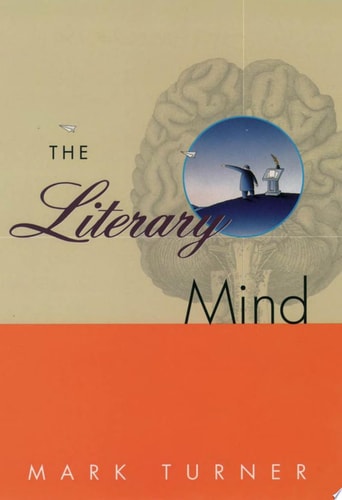
The Literary Mind: The Origins of Thought and Language
0
0
As an Amazon Associate and affiliate partner, Menrva Books earns from qualifying purchases. Learn more
Author Description
We usually consider literary thinking to be peripheral and dispensable, an activity for specialists: poets, prophets, lunatics, and babysitters. Certainly we do not think it is the basis of the mind. We think of stories and parables from Aesop's Fables or The Thousand and One Nights, for example, as exotic tales set in strange lands, with spectacular images, talking animals, and fantastic plots--wonderful entertainments, often insightful, but well removed from logic and science, and entirely foreign to the world of everyday thought. But Mark Turner argues that this common wisdom is wrong. The literary mind--the mind of stories and parables--is not peripheral but basic to thought. Story is the central principle of our experience and knowledge. Parable--the projection of story to give meaning to new encounters--is the indispensable tool of everyday reason. Literary thought makes everyday thought possible. This book makes the revolutionary claim that the basic issue for cognitive science is the nature of literary thinking. In The Literary Mind, Turner ranges from the tools of modern linguistics, to the recent work of neuroscientists such as Antonio Damasio and Gerald Edelman, to literary masterpieces by Homer, Dante, Shakespeare, and Proust, as he explains how story and projection--and their powerful combination in parable--are fundamental to everyday thought. In simple and traditional English, he reveals how we use parable to understand space and time, to grasp what it means to be located in space and time, and to conceive of ourselves, other selves, other lives, and other viewpoints. He explains the role of parable in reasoning, in categorizing, and in solving problems. He develops a powerful model of conceptual construction and, in a far-reaching final chapter, extends it to a new conception of the origin of language that contradicts proposals by such thinkers as Noam Chomsky and Steven Pinker. Turner argues that story, projection, and parable precede grammar.
Menrva's Summary
THE THESIS
Mark Turner investigates the provocative question of whether literary thinking, rather than being a peripheral human activity, serves as the fundamental basis for all human cognition and language. Turner, a professor of cognitive science, challenges the traditional separation between logical reasoning and narrative thought. He argues that story and parable are not merely artistic devices but are the essential tools through which the human mind constructs meaning, categorizes experience, and solves everyday problems.
THE SCOPE MAP
What You Will Find
- A cognitive model of conceptual construction based on story, projection, and parable.
- An analysis of how narrative structures facilitate human reasoning and spatial-temporal understanding.
- A synthesis of research from linguistics, neuroscience, and classical literature.
- A critique of existing theories regarding the origins of language, specifically challenging the views of Noam Chomsky and Steven Pinker.
THE AUTHORITY PERSPECTIVE
Experts in cognitive linguistics frequently cite this work as a significant contribution to the study of conceptual blending and narrative theory. Readers often note the academic density of the prose, which requires a foundational understanding of cognitive science to fully grasp the author's arguments regarding the origins of language.
Page Count:
196
Publication Date:
1998-01-01
Publisher:
Oxford University Press
ISBN-10:
0199839344
ISBN-13:
9780199839346
Psychology
Philosophy
English
Linguistics
English & College Success
Literary theory
Mind & Body
Literature
Community Tags
Other Editions(2)
Similar Books

Reader Comments
Share Your Thoughts
No comments yet. Be the first to share your thoughts!