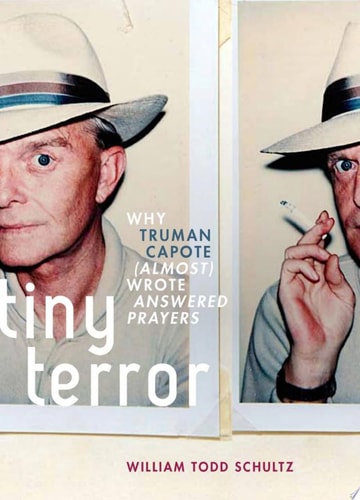
Tiny Terror: Why Truman Capote Wrote Answered Prayers
0
0
As an Amazon Associate and affiliate partner, Menrva Books earns from qualifying purchases. Learn more
Author Description
Truman Capote Was One Of The Most Gifted And Flamboyant Writers Of His Generation, Renowned For Such Books As Other Voices, Other Rooms, Breakfast At Tiffany's, And His Masterpiece, The Nonfiction Novel In Cold Blood. What Has Received Comparatively Little Attention, However, Is Capote's Last, Unfinished Book, Answered Prayers, A Merciless Skewering Of Cafe Society And The High-class Women Capote Called His Swans. When Excerpts Appeared He Was Immediately Blacklisted, Ruined Socially, Labeled A Pariah. Capote Recoiled--disgraced, Depressed, And All But Friendless. In Tiny Terror, A New Volume In Oxford's Inner Lives Series, William Todd Schultz Sheds Light On The Life And Works Of Capote And Answers The Perplexing Mystery--why Did Capote Write A Book That Would Destroy Him? Drawing On An Arsenal Of Psychological Techniques, Schultz Illuminates Capote's Early Years In The South--a Time That Capote Himself Described As A Snake's Nest Of No's--no Parents To Speak Of, No Friends But Books, No Hope, No Future. Out Of This Dark Childhood Emerged Capote's Prominent Dual Life-scripts: Neurotic Capote, Anxious, Vulnerable, Hypersensitive, Expecting To Be Hurt; And Capote The Disagreeable Destroyer, Emotionally Bulletproof, Nasty, And Bent On Revenge. Schultz Shows How Capote Would Strike Out When He Felt Hurt Or Taken For Granted, Engaging In Caustic Feuds With Gore Vidal, Tennessee Williams, And Many Other Writers. And Schultz Reveals How This Tendency Fed Into Answered Prayers, An Exceedingly Corrosive And Thinly Disguised Roman A Clef That Trashed His High-society Friends. What Emerges By The End Of This Book Is A Cogent, Immensely Insightful Portrait Of An Artist On The Edge, Brilliantly But Self-destructively Biting The Jet-set Hands That Fed Him. Anyone Interested In The Inner Life Of One Of America's Most Fascinating Literary Personalities Will Find This Book A Revelation.
Menrva's Summary
THE THESIS
This book investigates the psychological motivations behind Truman Capote's decision to write his final, career-ending work, Answered Prayers. William Todd Schultz, a scholar of personality psychology, utilizes a biographical framework to analyze how Capote's traumatic childhood and complex personality structure led to the creation of a text that effectively destroyed his social standing. By examining the interplay between Capote's vulnerability and his aggressive tendencies, the author argues that the book was an inevitable manifestation of the writer's internal conflict.
THE SCOPE MAP
What You Will Find
- A psychological analysis of Truman Capote's early life and formative years in the American South.
- An exploration of the 'dual life-scripts' that governed Capote's public and private behavior.
- Case studies of Capote's professional feuds with contemporaries like Gore Vidal and Tennessee Williams.
- An examination of the social fallout following the publication of excerpts from Answered Prayers.
THE AUTHORITY PERSPECTIVE
Experts and readers alike note that this work provides a sophisticated psychological lens through which to view Capote's literary decline. The text is frequently praised for its ability to balance academic rigor with a compelling narrative about the self-destructive nature of artistic genius.
Page Count:
208
Publication Date:
2011-01-01
Publisher:
Oxford University Press, Incorporated
ISBN-10:
0199830649
ISBN-13:
9780199830640
Biography
Psychology
Non-Fiction
Literary Criticism
Authors American
Community Tags
Similar Books