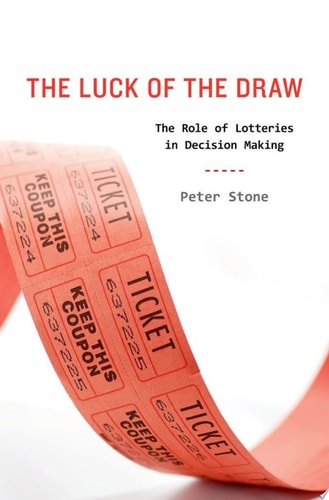
Luck of the Draw
0
0
As an Amazon Associate and affiliate partner, Menrva Books earns from qualifying purchases. Learn more
Author Description
From The Earliest Times, People Have Used Lotteries To Make Decisions--by Drawing Straws, Tossing Coins, Picking Names Out Of Hats, And So On. We Use Lotteries To Place Citizens On Juries, Draft Men Into Armies, Assign Students To Schools, And Even On Very Rare Occasions, Select Lifeboat Survivors To Be Eaten. Lotteries Make A Great Deal Of Sense In All Of These Cases, And Yet There Is Something Absurd About Them. Largely, This Is Because Lottery-based Decisions Are Not Based Upon Reasons. In Fact, Lotteries Actively Prevent Reason From Playing A Role In Decision Making At All. Over The Years, People Have Devoted Considerable Effort To Solving This Paradox And Thinking About The Legitimacy Of Lotteries As A Whole. However, These Scholars Have Mainly Focused On Lotteries On A Case-by-case Basis, Not As A Part Of A Comprehensive Political Theory Of Lotteries. In The Luck Of The Draw, Peter Stone Surveys The Variety Of Arguments Proffered For And Against Lotteries And Argues That They Only Have One True Effect Relevant To Decision Making: The Sanitizing Effect Of Preventing Decisions From Being Made On The Basis Of Reasons. While This Rationale Might Sound Strange To Us, Stone Contends That In Many Instances, It Is Vital That Decisions Be Made Without The Use Of Reasons. By Developing Innovative Principles For The Use Of Lottery-based Decision Making, Stone Lays A Foundation For Understanding When It Is--and When It Is Not--appropriate To Draw Lots When Making Political Decisions Both Large And Small.
Menrva's Summary
THE THESIS
This book investigates the paradox of using lotteries in political decision-making, questioning why we rely on chance when we prioritize rational deliberation in governance. Peter Stone, a political theorist, examines the historical and philosophical underpinnings of sortition and random selection. He argues that the primary function of a lottery is to sanitize the decision-making process by intentionally excluding reasons, which he posits is a necessary mechanism in specific political contexts.
THE SCOPE MAP
What You Will Find
- A comprehensive survey of historical and contemporary arguments for and against the use of lotteries.
- An analysis of the 'sanitizing effect' where lotteries prevent decisions from being based on biased or contentious reasons.
- A theoretical framework for determining the appropriateness of random selection in various political scenarios.
- Case studies ranging from jury selection and military drafts to school assignments and resource allocation.
THE AUTHORITY PERSPECTIVE
Scholars in political theory recognize this work as a significant contribution to the study of sortition and democratic mechanisms. Readers frequently note the academic density of the prose, which provides a rigorous foundation for understanding the role of chance in governance.
Page Count:
208
Publication Date:
2011-01-01
Publisher:
Oxford University Press, Incorporated
ISBN-10:
0199842442
ISBN-13:
9780199842445
Non-Fiction
Philosophy
Lotteries
Decision Making
Political Theory
Community Tags
Similar Books