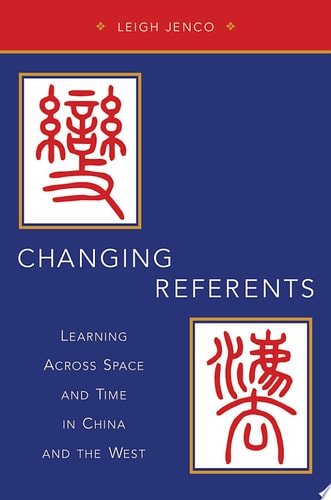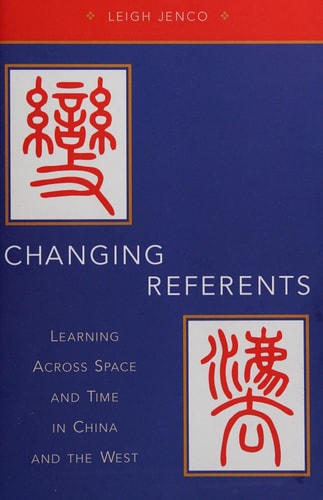
Changing Referents: Learning Across Space and Time in China and the West
0
0
As an Amazon Associate and affiliate partner, Menrva Books earns from qualifying purchases. Learn more
Author Description
Globalization has brought together otherwise disparate communities with distinctive and often conflicting ways of viewing the world. Yet even as these phenomena have exposed the culturally specific character of the academic theories used to understand them, most responses to this ethnocentricity fall back on the same parochial vocabulary they critique. Against those who insist our thinking must return always to the dominant terms of Euro-American modernity, Leigh Jenco argues - and more importantly, demonstrates - that methods for understanding cultural others can take theoretical guidance from those very bodies of thought typically excluded by political and social theory.Jenco examines a decades-long Chinese conversation over "Western Learning," starting in the mid-nineteenth century, which subjected methods of learning from difference to unprecedented scrutiny and development. Just as Chinese elites argued for the possibility of their producing knowledge along "Western" lines rather than "Chinese" ones, so too, Jenco argues, might we come to see foreign knowledge as a theoretical resource - that is, as a body of knowledge which formulates methods of argument, goals of inquiry, and criteria of evidence that may be generalizable to other places and times. The call of reformers such as Liang Qichao and Yan Fu to bianfa - literally "change the institutions" of Chinese society and politics in order to produce new kinds of Western knowledge-was simultaneously a call to "change the referents" those institutions sought to emulate, and from which participants might draw their self-understanding. Their arguments show that the institutional and cultural contexts which support the production of knowledge are not prefigured givens that constrain cross-cultural understanding, but dynamic platforms for learning that are tractable to concerted efforts over time to transform them. In doing so, these thinkers point us beyond the mere acknowledgement of cultural difference toward re
Menrva's Summary
THE THESIS
How can scholars effectively utilize non-Western intellectual traditions to expand the boundaries of contemporary political and social theory? Leigh K. Jenco, a scholar of political theory, challenges the ethnocentric limitations of current academic discourse by examining historical Chinese efforts to integrate foreign knowledge. She argues that foreign intellectual traditions should not merely be objects of study but active theoretical resources that provide alternative methods of inquiry, argumentation, and evidence-based reasoning.
THE SCOPE MAP
What You Will Find
- Analysis of the nineteenth-century Chinese discourse on "Western Learning."
- Examination of the work of reformers such as Liang Qichao and Yan Fu.
- A framework for treating cultural difference as a dynamic platform for knowledge production.
- Theoretical arguments regarding the malleability of institutional contexts in cross-cultural exchange.
Scope Limits
- The text does not provide a comprehensive history of all Chinese political thought.
- It does not offer a prescriptive manual for modern policy implementation.
THE AUTHORITY PERSPECTIVE
Scholars in the field of political theory and intellectual history recognize this work as a significant contribution to the critique of Euro-American academic hegemony. Readers frequently note the dense, rigorous nature of the prose, which is intended for an audience familiar with political philosophy and comparative methodology.
Page Count:
296
Publication Date:
2015-10-06
Publisher:
Oxford University Press
ISBN-10:
0190263814
ISBN-13:
9780190263812
Philosophy
Intellectual History
Globalization
Education china
Education
Chinese History
Political Theory
Education - History
Community Tags
Similar Books