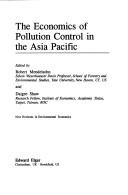
The Economics of Pollution Control in the Asia Pacific
0
0
As an Amazon Associate and affiliate partner, Menrva Books earns from qualifying purchases. Learn more
Author Description
The Economics of Pollution Control in the Asia Pacific adapts environmental economics to the special conditions of the Asia Pacific region, emphasizing the importance of local conditions and culture. Global warming, air pollution and water pollution are all addressed by a distinguished group of authors who rigorously apply economics to the analysis of pollution control in societies undergoing rapid industrialization. As this pioneering volume demonstrates, citizens of rapidly developing Taiwan and Korea are willing to pay substantial amounts for the protection and improvement of air and water quality, and face potentially huge losses from global climate change. A number of the papers also point to some cost effective alternatives for helping to reduce global greenhouse gas emission.
Menrva's Summary
THE THESIS
This book investigates the economic strategies for pollution control within the unique context of the Asia Pacific region. It adapts established environmental economics principles to account for local conditions and cultural factors, addressing critical issues such as global warming, air pollution, and water pollution. The analysis is conducted by distinguished authors who apply rigorous economic methods to societies experiencing rapid industrialization, demonstrating the significant willingness of citizens to pay for environmental improvements and the substantial economic losses associated with climate change. Furthermore, the volume explores cost-effective alternatives for reducing global greenhouse gas emissions.
THE SCOPE MAP
- Analysis of pollution control economics tailored to the Asia Pacific region.
- Emphasis on the influence of local conditions and culture on environmental policy.
- Examination of global warming, air pollution, and water pollution.
- Application of economic principles to societies undergoing rapid industrialization.
- Quantification of public willingness to pay for environmental quality improvements.
- Assessment of economic losses due to global climate change.
- Identification of cost-effective strategies for reducing greenhouse gas emissions.
THE AUTHORITY PERSPECTIVE
This volume is recognized for its pioneering application of environmental economics to the specific challenges of the Asia Pacific region. It highlights the critical role of local context and cultural factors in shaping effective pollution control strategies. The research presented demonstrates a significant economic valuation of environmental quality by citizens in rapidly developing economies and quantifies the economic risks posed by climate change. The book also offers practical insights into cost-effective methods for mitigating greenhouse gas emissions.
Page Count:
354
Publication Date:
1996-01-01
ISBN-10:
185898307X
Economics
Non-Fiction
Pollution Control
Climate Change
Community Tags
Similar Books