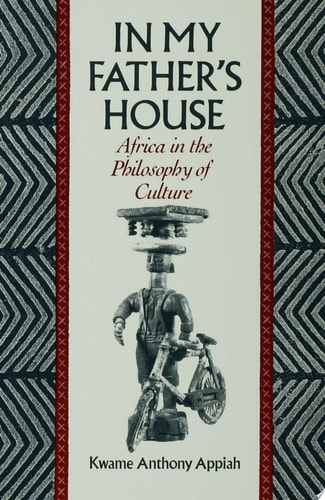
In My Father's House
0
0
As an Amazon Associate and affiliate partner, Menrva Books earns from qualifying purchases. Learn more
Author Description
The Beating Of Rodney King And The Resulting Riots In South Central Los Angeles. The Violent Clash Between Hasidim And African-americans In Crown Heights. The Boats Of Haitian Refugees Being Turned Away From The Land Of Opportunity. These Are Among The Many Racially-charged Images That Have Burst Across Our Television Screens In The Last Year Alone, Images That Show That For All Our Complacent Beliefs In A Melting-pot Society, Race Is As Much Of A Problem As Ever In America. In This Vastly Important, Widely-acclaimed Volume, Kwame Anthony Appiah, A Ghanaian Philosopher Who Now Teaches At Harvard, Explores, In His Words, The Possibilities And Pitfalls Of An African Identity In The Late Twentieth Century. In The Process He Sheds New Light On What It Means To Be An African-american, On The Many Preconceptions That Have Muddled Discussions Of Race, Africa, And Afrocentrism Since The End Of The Nineteenth Century, And, In The End, To Move Beyond The Idea Of Race. In My Father's House Is Especially Wide-ranging, Covering Everything From Pan Africanism, To The Works Of Early African-american Intellectuals Such As Alexander Crummell And W.e.b. Du Bois, To The Ways In Which African Identity Influences African Literature. In His Discussion Of The Latter Subject, Appiah Demonstrates How Attempts To Construct A Uniquely African Literature Have Ignored Not Only The Inescapable Influences That Centuries Of Contact With The West Have Imposed, But Also The Multicultural Nature Of Africa Itself. Emphasizing This Last Point Is Appiah's Eloquent Title Essay Which Offers A Fitting Finale To The Volume. In A Moving First-person Account Of His Father's Death And Funeral In Ghana, Appiah Offers A Brilliant Metaphor For The Tension Between Africa's Aspirations To Modernity And Its Desire To Draw On Its Ancient Cultural Roots. During The Los Angeles Riots, Rodney King Appeared On Television To Make His Now Famous Plea: People, Can We All Get Along? In This Beautiful, Elegantly Written Volume.
Menrva's Summary
THE THESIS
Kwame Anthony Appiah investigates the complex construction of African and African-American identity, questioning whether the concept of race remains a viable or necessary framework for understanding human experience in the late twentieth century. Drawing upon his background as a Ghanaian philosopher and academic, Appiah critiques the historical development of racial ideologies and the intellectual movements that have shaped modern perceptions of Africa. He argues that the obsession with racial categorization often obscures the internal diversity of African cultures and the inescapable influence of global, multicultural interactions.
THE SCOPE MAP
What You Will Find
- Historical analysis of Pan-Africanism and the intellectual contributions of figures like W.E.B. Du Bois and Alexander Crummell.
- A critical examination of the development of African literature and the tension between traditional roots and Western influence.
- Philosophical inquiry into the limitations of Afrocentrism and the social construction of racial identity.
- A personal, reflective essay on the author's father's funeral in Ghana, serving as a metaphor for the conflict between modernity and tradition.
THE AUTHORITY PERSPECTIVE
Scholars and critics frequently cite this work as a foundational text for understanding the intersection of post-colonial theory and racial identity. Readers often note the intellectual rigor of the prose, which balances philosophical depth with accessible cultural commentary.
Page Count:
256
Publication Date:
1993-01-01
Publisher:
Oxford University Press
ISBN-10:
0199874352
ISBN-13:
9780199874354
History
Philosophy
Sociology
Race Relations
Community Tags
Similar Books