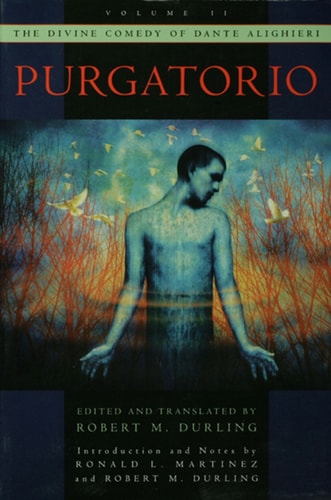
The Divine Comedy of Dante Alighieri: Purgatorio
0
0
As an Amazon Associate and affiliate partner, Menrva Books earns from qualifying purchases. Learn more
Author Description
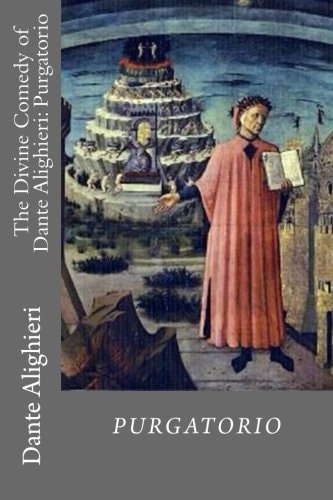
In the early 1300s, Dante Alighieri set out to write the three volumes which make the up The Divine Comedy. Purgatorio is the second volume in this set and opens with Dante the poet picturing Dante the pilgrim coming out of the pit of hell. Similar to the Inferno (34 cantos), this volume is divided into 33 cantos, written in tercets (groups of 3 lines). The English prose is arranged in tercets to facilitate easy correspondence to the verse form of the Italian on the facing page, enabling the reader to follow both languages line by line. In an effort to capture the peculiarities of Dante's original language, this translation strives toward the literal and sheds new light on the shape of the poem. Again the text of Purgatorio follows Petrocchi's La Commedia secondo l'antica vulgata, but the editor has departed from Petrocchi's readings in a number of cases, somewhat larger than in the previous Inferno, not without consideration of recent critical readings of the Comedy by scholars such as Lanza (1995, 1997) and Sanguineti (2001). As before, Petrocchi's punctuation has been lightened and American norms have been followed. However, without any pretensions to being "critical", the text presented here is electic and being not persuaded of the exclusive authority of any manuscript, the editor has felt free to adopt readings from various branches of the stemma. One major addition to this second volume is in the notes, where is found the Intercantica - a section for each canto that discusses its relation to the Inferno and which will make it easier for the reader to relate the different parts of the Comedy as a whole.
Menrva's Summary
THE PULSE
Dante the pilgrim emerges from the depths of Hell to begin his arduous ascent up the mountain of Purgatory, seeking spiritual purification and redemption. The narrative follows Dante as he traverses the seven terraces of the mountain, each corresponding to one of the seven deadly sins. Guided by Virgil, the protagonist encounters various souls undergoing penance, reflecting on the nature of human morality and divine justice. The work employs a complex allegorical framework, utilizing the tercet rhyme scheme to structure the pilgrim's progression toward the celestial realm.
INSIDE THE PAGES
- Utilization of the terza rima poetic structure throughout the cantos.
- Allegorical representation of the seven deadly sins and their corresponding penances.
- Integration of classical mythology alongside Christian theology.
- Exploration of the relationship between earthly actions and spiritual consequences.
- Inclusion of the Intercantica, providing thematic links to the preceding volume.
- Use of a dual-language format to facilitate comparison between Italian and English.
- Detailed examination of the transition from the despair of Hell to the hope of Purgatory.
- Philosophical discourse on free will and the nature of love.
THE COLLECTIVE ECHO
Readers and scholars frequently analyze this volume for its distinct shift in tone from the punitive atmosphere of the Inferno to the hopeful, restorative environment of the mountain. Discussion often centers on the intricate theological architecture and the psychological depth of the souls Dante encounters during his climb. Critics highlight the effectiveness of the author's use of light and shadow to mirror the pilgrim's internal state of repentance. The text is widely regarded as a foundational exploration of human growth and the necessity of discipline in the pursuit of spiritual clarity.
Page Count:
721
Publication Date:
2004-01-01
Publisher:
Oxford University Press
ISBN-10:
0199879834
ISBN-13:
9780199879830
Philosophy
Poetry
classic
English
English & College Success
Religious
Epic Poetry