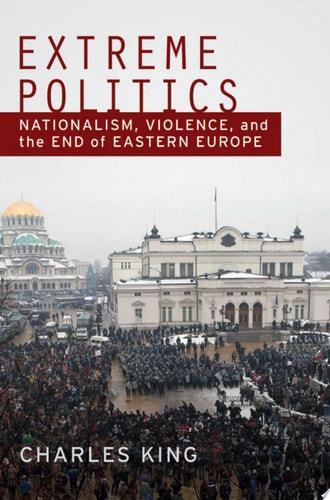
Extreme Politics: Nationalism, Violence, and the End of Eastern Europe
0
0
As an Amazon Associate and affiliate partner, Menrva Books earns from qualifying purchases. Learn more
Author Description
Why do some violent conflicts endure across the centuries, while others become dimly remembered ancient struggles among forgotten peoples? Is nationalism really the powerful force that it appeared to be in the 1990s? This wide-ranging work examines the conceptual intersection of nationalist ideology, social violence, and the political transformation of Europe and Eurasia over the last two decades. The end of communism seemed to usher in a period of radical change-an era of "extreme politics" that pitted nations, ethnic groups, and violent entrepreneurs against one another, from the wars in the Balkans and Caucasus to the apparent upsurge in nationalist mobilization throughout the region. But the last twenty years have also illustrated the incredible diversity of political life after the end of one-party rule. Extreme Politics engages with themes from the micropolitics of social violence, to the history of nationalism studies, to the nature of demographic change in Eurasia. Published twenty years since the collapse of communism, Extreme Politics charts the end of "Eastern Europe" as a place and chronicles the ongoing revolution in the scholarly study of the post-communist world.
Menrva's Summary
THE THESIS
This work investigates the complex relationship between nationalist ideology, social violence, and the political evolution of post-communist Europe and Eurasia. Charles King, a scholar of international affairs and political science, utilizes two decades of post-Cold War data to challenge the assumption that nationalism is a monolithic, inevitable force. He argues that the collapse of communism did not lead to a uniform political outcome, but rather a diverse array of state-building projects and violent conflicts that redefined the region.
THE SCOPE MAP
What You Will Find
- Analysis of the transition from one-party rule to diverse political systems in Eurasia.
- Examination of the micropolitics of social violence and ethnic mobilization.
- Historical overview of nationalism studies and demographic shifts since the 1990s.
- Comparative study of conflicts in the Balkans and the Caucasus.
THE AUTHORITY PERSPECTIVE
Experts recognize this text as a significant contribution to the study of post-communist political development and the sociology of violence. Readers frequently note the academic rigor of the prose and the author's ability to synthesize complex regional histories into a coherent theoretical framework.
Page Count:
255
Publication Date:
2010-01-01
Publisher:
Oxford University Press
ISBN-10:
0199888116
ISBN-13:
9780199888115
History
Nationalism
Ethnic relations
Post-communism
International relations
Sociology
European History
Community Tags
Similar Books