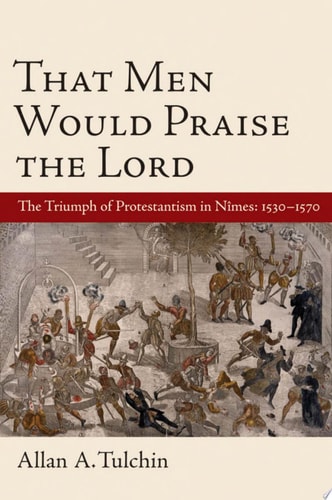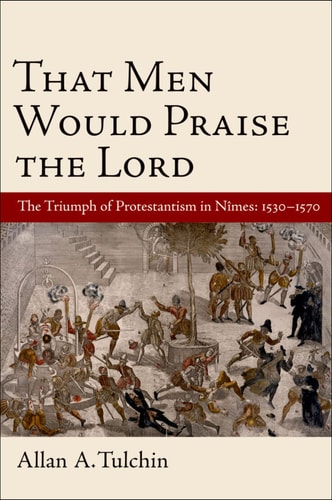
That Men Would Praise the Lord: The Triumph of Protestantism in Nîmes, 1530-1570
0
0
As an Amazon Associate and affiliate partner, Menrva Books earns from qualifying purchases. Learn more
Author Description
That Men Would Praise the Lord breaks apart the process of mass conversion in the sixteenth century to explain why the Reformation occurred, using Nîmes, the most Protestant town in France, as a case study. Protestantism was overwhelmingly successful in Nîmes (since most people converted), but the process culminated in two bloody massacres of Nîmes's remaining Catholics. Beginning in 1559, Nîmes went through a revolutionary period comparable to 1789 in its intensity. Townspeople flocked to hear Protestant preachers and then took over Catholic churches, destroyed statues and stained glass, and zealously took part in the Wars of Religion, which convulsed France beginning in 1562. As the Protestant movement grew, it had to adapt to changing circumstances. Nîmes's first Protestants were attracted to Calvin's theology. Later converts believed that the Church needed to be cleansed of its excesses to encourage moral reform and to assist the royal treasury. Iin the end, many converted because of peer pressure or under duress. Thus rather than argue that one factor - whether religious, economic, or political - explains the Reformation, Tulchin emphasizes that the Protestant movement was the result of compromises forged among its members. The conclusion extends his arguments to the rest of France.That Men Would Praise the Lord marries techniques from the social sciences, anthropology, and cultural history in an analytic narrative, resulting in a new, interdisciplinary theory of the Reformation.
Menrva's Summary
THE THESIS
This book investigates the mechanisms of mass conversion during the sixteenth-century Reformation by analyzing the specific case of Nîmes, France. Allan Tulchin, a scholar of early modern French history, utilizes archival data and social science methodologies to challenge monolithic explanations of religious change. He argues that the Protestant movement in Nîmes was not the result of a single cause, but rather a complex series of compromises driven by theological appeal, moral reform, economic necessity, and social coercion.
THE SCOPE MAP
What You Will Find
- A detailed analysis of the religious and political transformation of Nîmes between 1530 and 1570.
- An interdisciplinary framework combining anthropology, cultural history, and social science to explain mass conversion.
- Examination of the transition from early Calvinist theological attraction to later motivations involving peer pressure and duress.
- A comparative study of the revolutionary intensity in Nîmes during the mid-sixteenth century and its broader implications for the French Wars of Religion.
THE AUTHORITY PERSPECTIVE
Scholars recognize this work as a significant contribution to the study of the Reformation for its departure from purely theological or political interpretations. Readers frequently note the academic density of the prose and the author's effective use of social science techniques to reconstruct the lived experience of sixteenth-century townspeople.
Page Count:
320
Publication Date:
2010-01-01
Publisher:
Oxford University Press
ISBN-10:
0199889988
ISBN-13:
9780199889983
Religion
History
Reformation
European History
France
Social History
Religious History
Church History
Community Tags
Similar Books