The Voices of Nîmes
0
0
As an Amazon Associate and affiliate partner, Menrva Books earns from qualifying purchases. Learn more
Author Description
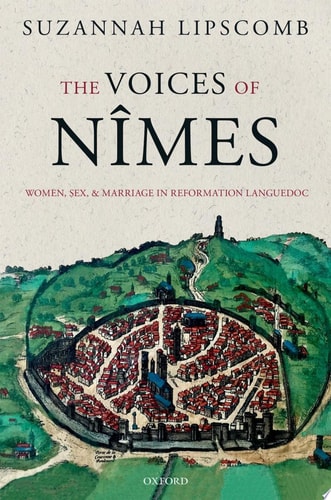
Most of the women who ever lived left no trace of their existence on the record of history. Sixteenth- and seventeenth-century women of the middling and lower levels of society left no letters or diaries in which they expressed what they felt or thought. Criminal courts and magistrates kept few records of their testimonies, and no ecclesiastical court records are known to survive for the French Roman Catholic Church between 1540 and 1667. For the most part, we cannot hear the voices of ordinary French women - but this study allows us to do so. Based on the evidence of 1,200 cases brought before the consistories - or moral courts - of the Huguenot Church of Languedoc between 1561 and 1615, The Voices of Nîmes allows us to access ordinary women's everyday lives: their speech, behaviour, and attitudes relating to love, faith, and marriage, as well as friendship and sex. Women appeared frequently before the Consistory because one of the chief functions of moral discipline was the regulation of sexuality, and women were thought to be primarily responsible for sexual sin. This means that the registers include over a thousand testimonies by and about women, most of whom left no other record to posterity. Women also featured so prominently before the consistories because of an ironic, unintended consequence of the consistorial system: it empowered women. Women quickly learnt how to use the Consistory: they denounced those who abused them, they deployed the Consistory to force men to honour their promises, and they started rumours they knew would be followed up by the elders. The registers therefore offer unrivalled evidence of women's agency, in this intensely patriarchal society, in a range of different contexts, such as their enjoyment of their sexuality, choice of marriage partners, or idiosyncratic spiritual engagement. The consistorial registers, therefore, let us see how independent, self-determining, and vocal women could be in an age when they had limited legal rights.
Menrva's Summary
THE THESIS
This study investigates how the moral courts of the Huguenot Church in 16th and 17th-century Languedoc provide a rare, documented window into the lives and agency of ordinary women who otherwise left no historical trace. Dr. Suzannah Lipscomb, a historian specializing in the early modern period, utilizes the records of 1,200 cases brought before the consistories of Nîmes between 1561 and 1615. By analyzing these testimonies, she argues that the consistorial system, while intended to regulate morality, inadvertently provided a platform for women to exercise agency, voice grievances, and navigate the constraints of a patriarchal society.
THE SCOPE MAP
What You Will Find
- Analysis of 1,200 consistorial court cases from 1561 to 1615.
- Examination of women's roles in marriage, sexuality, and religious life.
- Evidence of women using legal and moral institutions to challenge abuse and enforce social contracts.
- Insights into the daily speech and behavioral patterns of non-elite French women.
Scope Limits
- The study is geographically restricted to the Languedoc region of France.
- The research focuses primarily on the Huguenot church structure rather than Roman Catholic ecclesiastical records.
THE AUTHORITY PERSPECTIVE
Historians and scholars of early modern Europe frequently cite this work for its innovative use of moral court registers to recover the voices of marginalized populations. Readers often note the academic rigor of the research, which successfully balances detailed archival data with broader sociological conclusions about female agency.
Page Count:
320
Publication Date:
2018-01-01
Publisher:
Oxford University Press
ISBN-10:
0192518321
ISBN-13:
9780192518323
History
France
European History
Womens Studies
Social History
Religious History
Community Tags
Similar Books