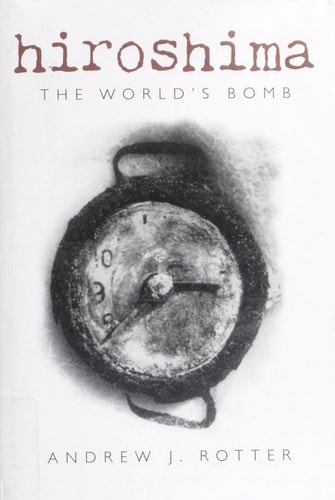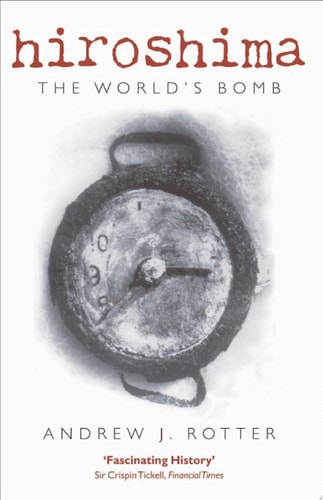
Hiroshima: The World's Bomb
0
0
As an Amazon Associate and affiliate partner, Menrva Books earns from qualifying purchases. Learn more
Author Description
The US decision to drop an atomic bomb on the Japanese city of Hiroshima on 6 August 1945 remains one of the most controversial events of the twentieth century. However, the controversy over the rights and wrongs of dropping the bomb has tended to obscure a number of fundamental and sobering truths about the development of this fearsome weapon. The principle of killing thousands of enemy civilians from the air was already well established by 1945 and had been practised on numerous occasions by both sides during the Second World War. Moreover, the bomb dropped on Hiroshima was conceived and built by an international community of scientists, not just by the Americans. Other nations (including Japan and Germany) were also developing atomic bombs in the first half of the 1940s, albeit hapharzardly. Indeed, it is difficult to imagine any combatant nation foregoing the use of the bomb during the war had it been able to obtain one. The international team of scientists organized by the Americans just got there first. As this fascinating new history shows, the bomb dropped by a US pilot that hot August morning in 1945 was in many ways the world's offspring, in both a technological and a moral sense. And it was the world that would have to face its consequences, strategically, diplomatically, and culturally, in the years ahead.
Menrva's Summary
THE THESIS
This book investigates the development of the atomic bomb as a global, rather than exclusively American, endeavor, challenging the narrative that the weapon was solely a product of United States military policy. Andrew J. Rotter, a professor of history, utilizes archival research and diplomatic records to argue that the atomic bomb was the inevitable result of an international scientific race. He posits that the moral and strategic precedents for mass civilian casualties were already established by all major combatants, making the eventual use of the weapon a consequence of global scientific and political trends rather than a singular national decision.
THE SCOPE MAP
What You Will Find
- Analysis of the international scientific community's role in nuclear research.
- Examination of strategic bombing campaigns in Europe and Asia prior to 1945.
- Comparative study of atomic development programs in Germany, Japan, and the United States.
- Discussion of the cultural and diplomatic aftermath of the Hiroshima bombing.
Scope Limits
- The text does not provide a minute-by-minute tactical account of the Hiroshima mission itself.
- It does not focus on the personal biographies of individual scientists, prioritizing institutional and geopolitical history.
THE AUTHORITY PERSPECTIVE
Historians and scholars of the Second World War frequently cite this work for its nuanced perspective on the international origins of nuclear technology. Readers often note that the prose is accessible yet academically rigorous, providing a balanced view that avoids simplistic moralizing.
Page Count:
384
Publication Date:
2008-01-01
Publisher:
OUP Oxford
ISBN-10:
019157791X
ISBN-13:
9780191577918
History
Military History
Asian History
World War
International relations
Atomic bomb
Nuclear weapons
Science History