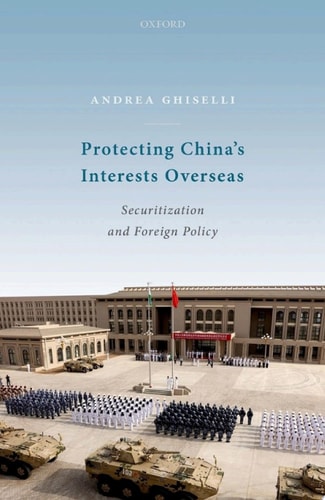
Protecting China's Interests Overseas: Securitization and Foreign Policy
0
0
As an Amazon Associate and affiliate partner, Menrva Books earns from qualifying purchases. Learn more
Author Description
Protecting China's Interests Overseas provides a fascinating and new window into Chinese foreign and security policymaking. In particular, it shows how the management of non-traditional security issues abroad led to the emergence of China's strategy to defend its interests overseas. This book comes at a critical time, as China has just inaugurated its first overseas military base in Djibouti, thereby establishing a long-term military presence outside Asia. Based on a large number of Chinese primary sources, the book examines how the main actors involved in the making and implementation of Chinese foreign policy understood the problem of protecting the assets and lives of Chinese companies and nationals abroad, especially in North Africa and the Middle East, and interacted with each other depending on their priorities, preferences, and organizational interests. As the different chapters explore various aspects and dynamics within the Chinese foreign and security policy machine, the analysis concludes that the emergence of China's strategy to defend its interests overseas was, to a large extent, crisis-driven. The evacuation of 36,000 Chinese nationals from Libya in 2011 was a critical moment in this process. Henceforth, significant efforts were made to strengthen the capabilities of and coordination between the different agencies under the control of the Chinese leadership, especially the Chinese People's Liberation Army. Consistently, China's military presence abroad expanded and evolved over the years to stabilize the regions where the country's human and economic presence is most significant, and to neutralize the non-traditional security threats against it. However, Chinese policymakers still face important challenges and complex dilemmas on the path to formulate a sustainable policy towards this very difficult issue. Protecting China's Interests Overseas also offers an opportunity to rethink how we study and understand Chinese foreign policymaking.
Menrva's Summary
THE THESIS
This book investigates how the management of non-traditional security threats abroad catalyzed the development of China's strategy to protect its overseas interests. Andrea Ghiselli, a researcher specializing in Chinese foreign policy, utilizes a framework of securitization to analyze how internal bureaucratic actors and leadership priorities shaped this strategic shift. The study argues that the evolution of China's overseas security posture was primarily a reactive, crisis-driven process rather than a pre-planned expansionist agenda.
THE SCOPE MAP
What You Will Find
- Analysis of the 2011 Libya evacuation as a critical turning point in policy.
- Examination of the coordination between the Chinese People's Liberation Army and civilian agencies.
- Case studies focusing on Chinese economic and human presence in North Africa and the Middle East.
Scope Limits
- The text does not provide a comprehensive history of all Chinese military operations globally.
- It does not offer a predictive model for future Chinese foreign policy decisions.
THE AUTHORITY PERSPECTIVE
Experts highlight this work as a rigorous, source-heavy examination of the internal mechanics of Chinese policymaking. Readers frequently note the academic density of the prose and the value of the author's reliance on primary Chinese-language documentation.
Page Count:
301
Publication Date:
2021-01-01
Publisher:
OUP Oxford
ISBN-10:
0192637339
ISBN-13:
9780192637338
Asia history
Asian
Geopolitics
Security Studies
International relations
Military History
Community Tags
Similar Books