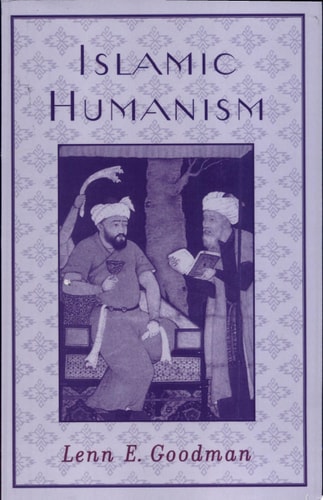
Islamic Humanism
0
0
As an Amazon Associate and affiliate partner, Menrva Books earns from qualifying purchases. Learn more
Author Description
Tracing the course of thought, action, and expression in the golden age of Islamic civilization. Lenn E. Goodman's Islamic Humanism paints a vivid panorama that departs strikingly from the all too familiar image of Islamic dogma, authoritarianism, and militancy. Among the poets and philosophers scientists and historians, ethicists and mystics of Islam, Goodman finds a warm and vital humanism, committed to the pursuit of knowledge and to the cosmopolitan values of generosity, tolerance, and understanding. Drawing on a wide range of writings, from love poetry to pietism, to satire, to history and metaphysics, and on to hunting, music and the dance, clothing, politics, and the marketplace. Goodman discloses the rich texture of classical Islamic civilization - its distinctive problematics and the space it left for the talents and creativity of the individual. His philosophic openness and easy familiarity with the monuments of Western civilization allow him to place Islamic humanism securely in its larger context, revealing clearly what is of universal and abiding vitality and interest.
Menrva's Summary
THE THESIS
This work investigates the intellectual and cultural foundations of the Islamic Golden Age to argue for the existence of a robust, historically significant tradition of humanism within Islamic civilization. Lenn E. Goodman, a scholar of philosophy and Middle Eastern studies, utilizes a multidisciplinary approach to challenge prevailing stereotypes of Islamic history as defined solely by dogma or militancy. By examining the interplay between individual creativity and societal norms, the author constructs a framework that highlights the cosmopolitan values of tolerance and intellectual inquiry that characterized the era.
THE SCOPE MAP
What You Will Find
- An analysis of diverse literary and intellectual outputs including poetry, satire, metaphysics, and historical writing.
- Examination of social and cultural practices ranging from music and dance to marketplace politics and fashion.
- A comparative methodology that situates Islamic intellectual achievements within the broader context of global philosophical history.
- Evidence drawn from primary source texts spanning the fields of ethics, science, and mysticism.
THE AUTHORITY PERSPECTIVE
Scholars and readers frequently identify this text as a significant contribution to the study of Islamic intellectual history, noting its ability to synthesize complex cultural data into a coherent narrative. Experts highlight the author's accessible prose style as a key factor in making dense philosophical concepts understandable for a general audience.
Page Count:
288
Publication Date:
2005-01-01
Publisher:
Oxford University Press
ISBN-10:
0199885001
ISBN-13:
9780199885008
Philosophy
Religion
History
Humanism
Islamic Studies
Human rights
Middle Eastern
Community Tags
Similar Books