Genocide
0
0
As an Amazon Associate and affiliate partner, Menrva Books earns from qualifying purchases. Learn more
Author Description
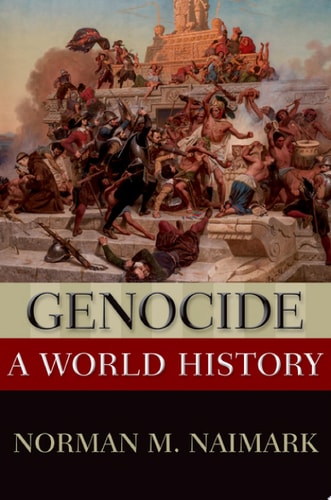
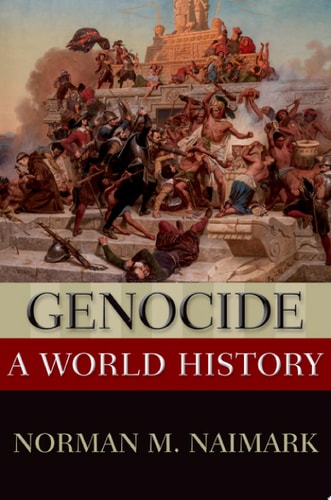
Genocide Occurs In Every Time Period And On Every Continent. Using The 1948 U.n. Definition Of Genocide As Its Departure Point, This Book Examines The Main Episodes In The History Of Genocide From The Beginning Of Human History To The Present. Norman M. Naimark Lucidly Shows That Genocide Both Changes Over Time, Depending On The Character Of Major Historical Periods, And Remains The Same In Many Of Its Murderous Dynamics. He Examines Cases Of Genocide As Distinct Episodes Of Mass Violence, But Also In Historical Connection With Earlier Episodes. Unlike Much Of The Literature In Genocide Studies, Naimark Argues That Genocide Can Also Involve The Elimination Of Targeted Social And Political Groups, Providing An Insightful Analysis Of Communist And Anti-communist Genocide. He Pays Special Attention To Settler (sometimes Colonial) Genocide As A Subject Of Major Concern, Illuminating How Deeply The Elimination Of Indigenous Peoples, Especially In Africa, South America, And North America, Influenced Recent Historical Developments. At The Same Time, The Classic Cases Of Genocide In The Twentieth Century - The Armenian Genocide, The Holocaust, Rwanda, And Bosnia -- Are Discussed, Together With Recent Episodes In Darfur And Congo.
Menrva's Summary
THE THESIS
This book investigates the historical evolution and recurring dynamics of genocide from antiquity to the modern era. Norman M. Naimark, a professor of history at Stanford University, utilizes the 1948 United Nations definition as a foundational framework to analyze mass violence. He argues that while the specific manifestations of genocide shift according to historical context, the underlying murderous mechanisms remain consistent across time. The text synthesizes global case studies to demonstrate how the targeting of social and political groups, alongside indigenous populations, has shaped modern history.
THE SCOPE MAP
What You Will Find
- Historical analysis of genocide from early human history to contemporary conflicts in Darfur and the Congo.
- Examination of settler and colonial violence against indigenous peoples in Africa, North America, and South America.
- Comparative study of 20th-century cases including the Armenian Genocide, the Holocaust, Rwanda, and Bosnia.
- Analysis of communist and anti-communist political violence.
Scope Limits
- The text does not provide an exhaustive legal analysis of international law beyond the 1948 UN definition.
- It does not focus on individual psychological profiles of perpetrators, prioritizing structural and historical patterns instead.
THE AUTHORITY PERSPECTIVE
Scholars and students of history recognize this work as a concise and accessible synthesis of a complex field. Readers frequently note that Naimark provides a clear, objective framework that effectively bridges the gap between specific historical events and broader theoretical patterns of mass violence.
Page Count:
176
Publication Date:
2016-01-01
Publisher:
Oxford University Press
ISBN-10:
0190637714
ISBN-13:
9780190637712
History
Sociology
Human rights
Community Tags
Similar Books