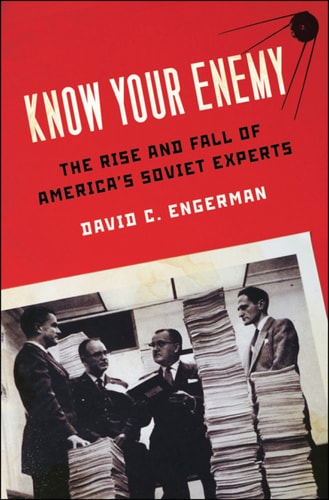
Know Your Enemy: The Rise and Fall of America's Soviet Experts
0
0
As an Amazon Associate and affiliate partner, Menrva Books earns from qualifying purchases. Learn more
Author Description
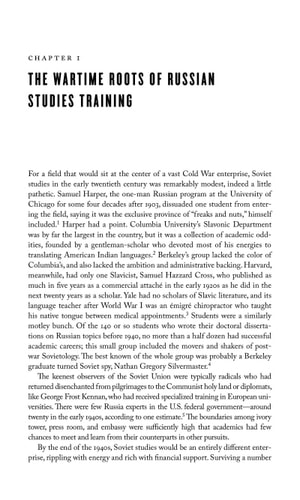
As World War II ended, few Americans in government or universities knew much about the Soviet Union. As David Engerman shows in this book, a network of scholars, soldiers, spies, and philanthropists created an enterprise known as Soviet Studies to fill in this dangerous gap in American knowledge. This group brought together some of the nation's best minds from the left, right, and center, colorful and controversial individuals ranging from George Kennan to Margaret Mead to Zbigniew Brzezinski, not to mention historians Sheila Fitzpatrick and Richard Pipes. Together they created the knowledge that helped fight the Cold War and define Cold War thought. Soviet Studies became a vibrant intellectual enterprise, studying not just the Soviet threat, but Soviet society and culture at a time when many said that these were contradictions in terms, as well as Russian history and literature. And this broad network, Engerman argues, forever changed the relationship between the government and academe, connecting the Pentagon with the ivory tower in ways that still matter today.
Menrva's Summary
THE THESIS
How did a small network of American scholars and officials construct the field of Soviet Studies to influence national policy and intellectual discourse during the Cold War? David C. Engerman, a professor of history, utilizes extensive archival research and biographical analysis to trace the development of this academic-government partnership. He argues that the creation of Soviet Studies was not merely an intellectual pursuit but a strategic endeavor that permanently altered the relationship between American universities and the national security state.
THE SCOPE MAP
What You Will Find
- Historical analysis of the emergence of Soviet Studies from 1945 through the end of the Cold War.
- Examination of the collaborative network involving academics, intelligence officers, and philanthropic organizations.
- Case studies of influential figures including George Kennan, Margaret Mead, and Richard Pipes.
- Investigation into the institutional ties between the Pentagon and American higher education.
THE AUTHORITY PERSPECTIVE
Reader & Expert Consensus: Scholars and historians recognize this work as a definitive account of the intersection between academic expertise and foreign policy. Readers frequently note the meticulous archival detail and the balanced assessment of how intellectual output shaped geopolitical strategy.
Page Count:
472
Publication Date:
2009-01-01
Publisher:
Oxford University Press
ISBN-10:
0199886687
ISBN-13:
9780199886685
History
Soviet Union
International relations
Cold War
American History
European History
Intellectual History