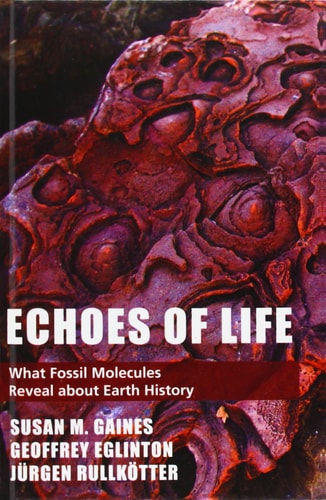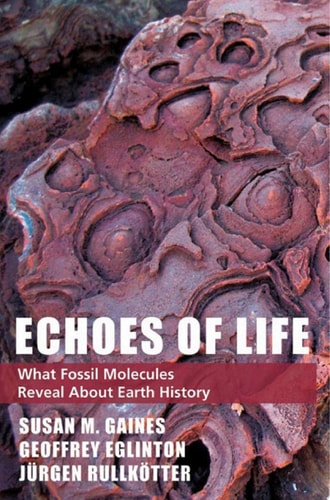
Echoes of Life: What Fossil Molecules Reveal about Earth History
0
0
As an Amazon Associate and affiliate partner, Menrva Books earns from qualifying purchases. Learn more
Author Description
In 1936 a German chemist identified certain organic molecules that he had extracted from ancient rocks and oils as the fossil remains of chlorophyll--presumably from plants that had lived and died millions of years in the past. It was another twenty-five years before this insight was developed and the term "biomarker" coined to describe fossil molecules whose molecular structures could reveal the presence of otherwise elusive organisms and processes. Echoes of Life is the story of these molecules and how they are illuminating the history of the earth and its life. It is also the story of how a few maverick organic chemists and geologists defied the dictates of their disciplines and--at a time when the natural sciences were fragmenting into ever-more-specialized sub-disciplines--reunited chemistry, biology and geology in a common endeavor. The rare combination of rigorous science and literary style--woven into a historic narrative that moves naturally from the simple to the complex--make Echoes of Life a book to be read for pleasure and contemplation, as well as education.
Menrva's Summary
THE THESIS
How can organic molecules trapped in ancient rock formations serve as biological markers to reconstruct the history of life on Earth? The authors, including renowned organic geochemist Geoffrey Eglinton, synthesize decades of research to explain the development of biomarker analysis. They argue that the integration of chemistry, biology, and geology provides a more comprehensive understanding of Earth's evolution than any single discipline could achieve alone.
THE SCOPE MAP
What You Will Find
- The historical development of biomarker identification starting from 1936 chlorophyll extraction.
- Methodologies for extracting and analyzing organic molecules from ancient rocks and oils.
- Case studies demonstrating how molecular structures reveal the presence of extinct organisms.
- An interdisciplinary framework that bridges the gap between organic chemistry and geological history.
THE AUTHORITY PERSPECTIVE
Experts recognize this work as a significant synthesis of organic geochemistry that remains accessible to non-specialists. Readers frequently note the balance between technical scientific detail and the narrative history of the researchers who pioneered the field.
Page Count:
374
Publication Date:
2008-01-01
Publisher:
Oxford University Press
ISBN-10:
0199884188
ISBN-13:
9780199884186
Science
Paleontology
Geology
Fossils
Biology
Earth Sciences
Biomolecules
Chemistry