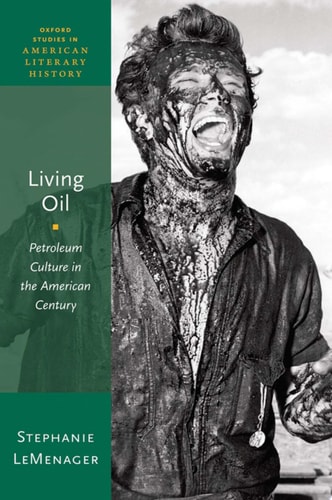
Living Oil: Petroleum Culture in the American Century
0
0
As an Amazon Associate and affiliate partner, Menrva Books earns from qualifying purchases. Learn more
Author Description
Living Oil is a work of environmental cultural studies that engages with a wide spectrum of cultural forms, from museum exhibits and oil industry tours to poetry, documentary film, fiction, still photography, novels and memoirs. The book's unique focus is the aesthetic, sensory and emotional legacies of petroleum, from its rise to the preeminent modern fossil fuel during World War I through the current era of so-called Tough Oil. LeMenager conceives Tough Oil as a bid for continuity with the charismatic lifestyles of the American twentieth century that carries distinct and extreme external costs. She explores the uncomfortable, mixed feelings produced by oil's omnipresence in cultural artifacts such as books, films, hamburgers, and Aspirin tablets. The book makes a strong argument for the region as a vital intellectual frame for the study of fossil fuels, because at the regional level we can better recognize the material effects of petroleum on the day-to-day lives of humans and other, non-human lives. Varied forms of art, too, localize the material impacts of petro-culture. The fluid mobility of oil carries the book outside the United States, for instance to Alberta and Nigeria, emphasizing how both international and domestic resource regions have been mined to produce the idealized modern cultures of the so-called American Century.
Menrva's Summary
THE THESIS
This work investigates how the aesthetic, sensory, and emotional legacies of petroleum have shaped the cultural identity of the American twentieth century. Stephanie LeMenager, a scholar in environmental humanities, utilizes a multidisciplinary framework to analyze how fossil fuels transitioned from a modern convenience to an omnipresent material force. By examining diverse cultural artifacts ranging from literature to industrial tours, she argues that the pursuit of 'Tough Oil' represents a desperate attempt to maintain the charismatic lifestyles of the past despite mounting environmental and social costs.
THE SCOPE MAP
What You Will Find
- Analysis of cultural forms including documentary film, photography, memoirs, and museum exhibits.
- A regional framework for understanding the material impacts of petro-culture on human and non-human lives.
- Examination of the global reach of oil, specifically referencing resource extraction in Alberta and Nigeria.
- Exploration of the psychological and sensory relationship between modern consumer goods and fossil fuel dependency.
THE AUTHORITY PERSPECTIVE
Scholars in the field of environmental humanities identify this text as a significant contribution to the study of petro-culture and its influence on American aesthetics. Readers frequently note the academic density of the prose and the author's ability to synthesize disparate cultural artifacts into a cohesive argument about fossil fuel dependency.
Page Count:
288
Publication Date:
2013-01-01
Publisher:
Oxford University Press
ISBN-10:
0199899436
ISBN-13:
9780199899432
History
Customs & Traditions
English & College Success
History of the Americas
English
Literary Criticism
American History
Cultural History
Community Tags
Other Editions(3)

Similar Books














