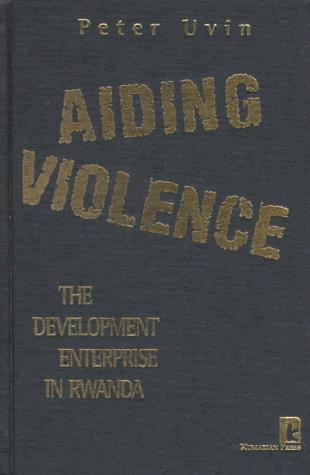
Aiding Violence
0
0
As an Amazon Associate and affiliate partner, Menrva Books earns from qualifying purchases. Learn more
Author Description
Aiding Violence expresses outrage at the contradiction of massive genocide in a country considered by Western aid agencies to be a model of development. Focusing on the 1990s dynamics of militarization and polarization that resulted in genocide, Uvin reveals how aid enterprises reacted, or failed to react, to those dynamics. By outlining the profound structural basis on which the genocidal edifice was built, the book exposes practices of inequality, exclusion, and humiliation throughout Rwanda.--Publisher's description.
Menrva's Summary
THE THESIS
This book investigates how Western aid agencies, operating in a country lauded for its development, failed to prevent or even inadvertently contributed to a massive genocide. Peter Uvin, drawing on his extensive experience in development studies, examines the critical dynamics of militarization and polarization that characterized Rwanda in the 1990s. The book meticulously outlines the profound structural inequalities, exclusion, and humiliation that formed the bedrock of the genocidal edifice, revealing the paradoxical role of aid enterprises in this devastating period.
THE SCOPE MAP
- Analysis of the contradiction between Western aid models and the reality of genocide.
- Examination of the 1990s dynamics of militarization and polarization in Rwanda.
- Investigation into the reactions, or lack thereof, of aid enterprises to these dynamics.
- Exposes the profound structural basis of the genocidal edifice.
- Details practices of inequality, exclusion, and humiliation within Rwanda.
- Focuses on the period leading up to and including the genocide.
THE AUTHORITY PERSPECTIVE
The book is recognized for its critical examination of the role of international aid in contexts of mass violence, specifically focusing on Rwanda in the 1990s. It is noted for its detailed analysis of how development aid structures can intersect with and potentially exacerbate political and social crises. The work is considered a significant contribution to understanding the complex interplay between foreign assistance, state dynamics, and the conditions that foster genocide. Its findings prompt crucial questions about accountability and the unintended consequences of development interventions.
Page Count:
275
Publication Date:
1998-01-01
ISBN-10:
1565490843
ISBN-13:
9781565490840
History
Crime
Non-Fiction
Politics
Sociology
Community Tags
Similar Books