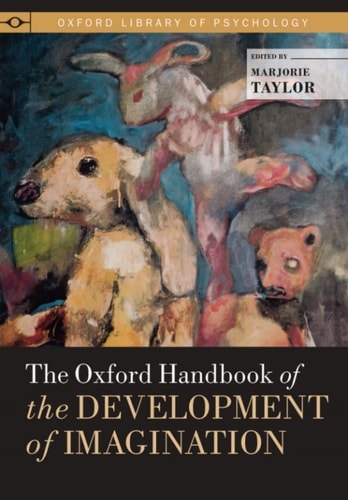
OHB DEV OF IMAGINATION OLOP C (Oxford Library of Psychology)
0
0
As an Amazon Associate and affiliate partner, Menrva Books earns from qualifying purchases. Learn more
Author Description
Children are widely celebrated for their imaginations, but developmental research on this topic has often been fragmented or narrowly focused on fantasy. However, there is growing appreciation for the role that imagination plays in cognitive and emotional development, as well as its link with children's understanding of the real world. With their imaginations, children mentally transcend time, place, and/or circumstance to think about what might have been, plan and anticipate the future, create fictional relationships and worlds, and consider alternatives to the actual experiences of their lives.The Oxford Handbook of the Development of Imagination provides a comprehensive overview of this broad new perspective by bringing together leading researchers whose findings are moving the study of imagination from the margins of mainstream psychology to a central role in current efforts to understand human thought. The topics covered include fantasy-reality distinctions, pretend play, magical thinking, narrative, anthropomorphism, counterfactual reasoning, mental time travel, creativity, paracosms, imaginary companions, imagination in non-human animals, the evolution of imagination, autism, dissociation, and the capacity to derive real life resilience from imaginative experiences. Many of the chapters include discussions of the educational, clinical, and legal implications of the research findings and special attention is given to suggestions for future research.
Menrva's Summary
THE THESIS
This volume investigates the central role that imagination plays in the cognitive and emotional development of children, moving the subject from the periphery of psychological study to a foundational position. Editor Marjorie Taylor, a prominent researcher in developmental psychology, compiles contributions from leading experts to synthesize current findings on how children use imagination to navigate reality, plan for the future, and process complex social and emotional experiences. The text argues that imagination is not merely a diversion into fantasy, but a critical mechanism for human thought and resilience.
THE SCOPE MAP
What You Will Find
- Comprehensive analysis of fantasy-reality distinctions and pretend play.
- Examination of cognitive processes including counterfactual reasoning and mental time travel.
- Discussion of clinical and educational implications, including the study of autism and dissociation.
- Research on the evolution of imagination and its presence in non-human animals.
THE AUTHORITY PERSPECTIVE
Experts recognize this handbook as a definitive resource for scholars and practitioners interested in the intersection of developmental psychology and cognitive science. The text is noted for its academic rigor and its success in bridging the gap between theoretical research and practical applications in clinical and educational settings.
Page Count:
585
Publication Date:
2013-01-01
Publisher:
Oxford University Press
ISBN-10:
0199909199
ISBN-13:
9780199909193
Non-Fiction
Psychology
Psychotherapy
Developmental Psychology
Education
Community Tags
Similar Books