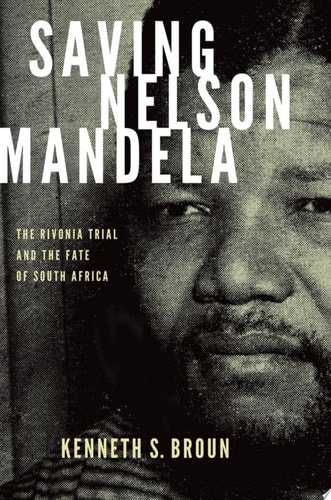
Saving Nelson Mandela: The Rivonia Trial and the Fate of South Africa
0
0
As an Amazon Associate and affiliate partner, Menrva Books earns from qualifying purchases. Learn more
Author Description
The question was: would he hang? In 1963, when South Africa's apartheid government charged Nelson Mandela with planning its overthrow, most observers feared that he would be sentenced to death. But the support he and his fellow activists in the African National Congress received during his trial not only saved his life, but also enabled him to save his country. In Saving Nelson Mandela, South African law expert Kenneth S. Broun recreates the trial, called the "Rivonia" Trial after the Johannesburg suburb where police seized Mandela. Based upon interviews with many of the case's primary figures and portions of the trial transcript, Broun situates readers inside the courtroom at the imposing Palace of Justice in Pretoria. Here, the trial unfolds through a dramatic narrative that captures the courage of the accused and their defense team, as well as the personal prejudices that colored the entire trial. The Rivonia trial had no jury and only a superficial aura of due process, combined with heavy security that symbolized the apartheid government's system of repression. Broun shows how outstanding advocacy, combined with widespread public support, in fact backfired on apartheid leaders, who sealed their own fate. Despite his 27-year incarceration, Mandela's ultimate release helped move his country from the racial tyranny of apartheid toward democracy. As documented in this inspirational book, the Rivonia trial was a critical milestone that helped chart the end of Apartheid and the future of a new South Africa.
Menrva's Summary
THE THESIS
The central question investigated is how the Rivonia Trial, intended by the apartheid government to eliminate Nelson Mandela, instead became a catalyst for the eventual dismantling of the South African racial regime. Kenneth S. Broun, a legal scholar with expertise in South African law, utilizes primary source interviews and trial transcripts to reconstruct the courtroom proceedings. He argues that the combination of skilled legal advocacy and international public pressure transformed a show trial into a platform for the anti-apartheid movement, ultimately undermining the legitimacy of the state's repressive apparatus.
THE SCOPE MAP
What You Will Find
- Detailed analysis of the 1963 Rivonia Trial proceedings in Pretoria.
- Examination of the legal strategies employed by the defense team against the apartheid state.
- Primary source evidence derived from interviews with key trial participants.
- Historical context regarding the transition from racial tyranny to democracy in South Africa.
THE AUTHORITY PERSPECTIVE
Experts and historians recognize this work as a significant contribution to the study of legal history and the anti-apartheid struggle. Readers frequently note the clarity with which Broun navigates complex legal procedures while maintaining a focus on the broader political implications of the trial.
Page Count:
230
Publication Date:
2012-01-01
Publisher:
Oxford University Press
ISBN-10:
0199913129
ISBN-13:
9780199913121
History
Biography
Apartheid
African history
South Africa
European History
Political Crimes And Offenses
Law
Professional Career & Trade
Community Tags
Similar Books