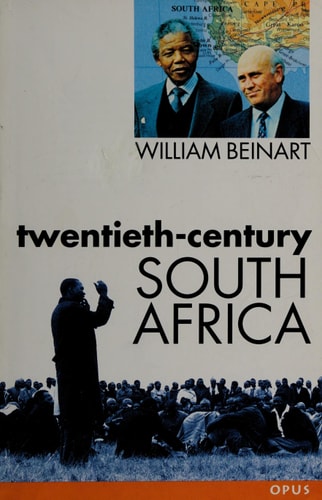
Twentieth-Century South Africa
0
0
As an Amazon Associate and affiliate partner, Menrva Books earns from qualifying purchases. Learn more
Author Description
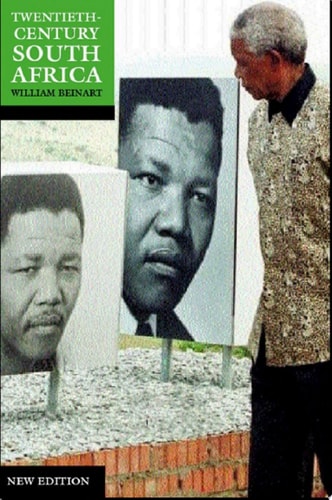
This accessible and concise introduction to South Africa's turbulent history this century is the first to emphasize the social and economic history underlying the political upheavals and the establishment and fitful dismantling of apartheid. Beinart, a leading South Africa historian, begins with the final colonial conquests of the late 19th century and ends with a prognosis for democracy and redistribution of resources in the 1990s. Along the way he considers how popular culture and politics help to explain the rise of Afrikaner and African nationalism, and looks at such key topics as patterns of violence, the significance of ethnicity, and the variety of radical politics and religious expression. Written for the student and general reader, this book will serve as a useful guide to this vital period in twentieth-century history.
Menrva's Summary
THE THESIS
How did the intersection of social, economic, and political forces shape the trajectory of South Africa throughout the twentieth century? William Beinart, a historian at the University of Bristol, utilizes extensive archival research and historiographical analysis to examine the structural foundations of South African society. He argues that the political history of the nation cannot be understood without prioritizing the underlying economic shifts and social movements that defined the era.
THE SCOPE MAP
What You Will Find
- Analysis of the transition from late 19th-century colonial conquest to the democratic reforms of the 1990s.
- Examination of the rise and eventual dismantling of the apartheid system.
- Exploration of Afrikaner and African nationalism, ethnic identity, and religious expression.
- Discussion of popular culture and its role in political mobilization.
Scope Limits
- The text focuses primarily on the twentieth century, providing limited coverage of pre-colonial history.
- The analysis is synthesized for students and general readers, rather than providing an exhaustive primary-source deep dive into every specific regional conflict.
THE AUTHORITY PERSPECTIVE
Scholars and educators frequently cite this work as a foundational, accessible introduction to the complexities of South African history. Experts highlight the author's ability to balance rigorous historiographical debate with a narrative style suitable for both academic and general audiences.
Page Count:
320
Publication Date:
1994-10-27
Publisher:
Oxford University Press
ISBN-10:
0192892398
ISBN-13:
9780192892393
History
South Africa
Twentieth Century
Social History
Apartheid
African history
Political History
Community Tags
Other Editions(4)


Similar Books