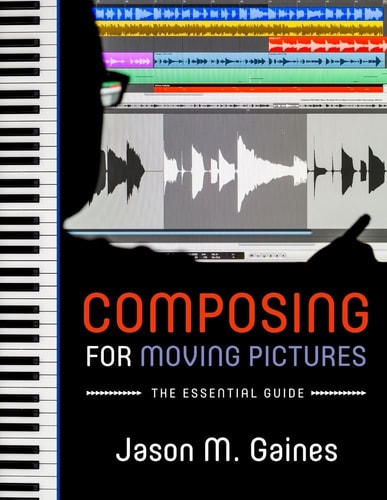
Composing for Moving Pictures: The Essential Guide
0
0
As an Amazon Associate and affiliate partner, Menrva Books earns from qualifying purchases. Learn more
Author Description
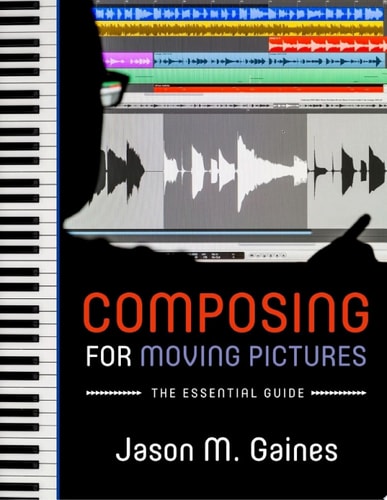
Making quality moving pictures has never been easier or more affordable, and the proliferation and ease of access to digital recording devices has prompted scores of amateurs to record and post videos to YouTube and its ilk. Paradoxically, however, scoring and arranging music for motion pictures is, in many ways, more complicated now than ever before, requiring extensive knowledge of notation, arranging, recording, and mixing software and multi-component DAW workstations.In Composing for Moving Pictures: The Essential Guide, author Jason Gaines offers practical tools with which to navigate the increasingly complex environment of movie music composition. He addresses both the principles of composition for moving pictures and the technologies which drive music composition, performance, and recording in an integrated and comprehensive fashion. The guide takes readers from square one - how technology can facilitate, rather than hinder, creativity in scoring - and then moves into the basics of working with MIDI files and on to more advanced concepts such as arranging and mixing. Gaines illustrates each step of the process with screen shots and explanations in the form of program tutorials. Composing for Moving Pictures fills a hole in literature on film scoring in the digital age and will prove to be an invaluable resource for music educators at the university and secondary level. Amateur composers will also delight in this easy-to-use guidebook.
Menrva's Summary
THE THESIS
How can composers effectively navigate the intersection of traditional music theory and modern digital production tools to score moving pictures? Jason M. Gaines provides a comprehensive framework for both amateur and professional composers, addressing the technical and creative challenges inherent in the digital age. By integrating principles of composition with the practical application of DAW workstations and MIDI technology, the author offers a structured approach to film scoring. The text serves as a bridge between artistic intent and the technical requirements of contemporary recording and mixing environments.
THE SCOPE MAP
What You Will Find
- Technical workflows for MIDI integration and DAW workstation management
- Principles of musical arrangement and composition for visual media
- Step-by-step tutorials featuring software interface screenshots
- Practical strategies for balancing creative output with digital production constraints
THE AUTHORITY PERSPECTIVE
Educators and students frequently identify this work as a practical resource for bridging the gap between traditional music theory and modern digital production. Experts highlight the book's utility in university and secondary music curricula due to its clear, tutorial-based approach to complex software environments.
Page Count:
303
Publication Date:
2015-01-01
Publisher:
Oxford University Press
ISBN-10:
0199911754
ISBN-13:
9780199911752
Music
Technology
Education
Reference
Film
Humanities
Community Tags
Other Editions(3)
Similar Books