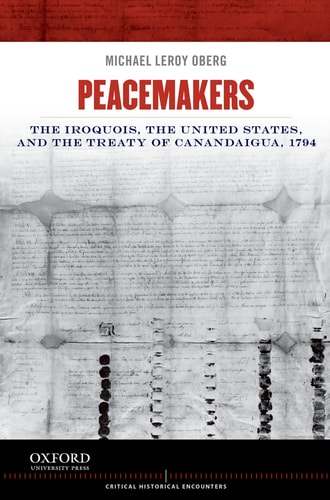
Peacemakers: The Iroquois, the United States, and the Treaty of Canandaigua, 1794
0
0
As an Amazon Associate and affiliate partner, Menrva Books earns from qualifying purchases. Learn more
Author Description
Peacemakers: The Iroquois, the United States, and the Treaty of Canandaigua, 1794 offers a glimpse into how native peoples participated in the intercultural diplomacy of the New Nation and how they worked to protect their communities against enormous odds. The book introduces students, in detail, to the Treaty of Canandaigua, which is little known outside of Central New York. It examines how the Six Nations of the Iroquois secured from the United States a recognition of their sovereign status as separate polities with the right to the "free use and enjoyment" of their lands.In the fall of 1794 leaders from the Six Nations of the Iroquois met with officials from the U.S. in Canandaigua, New York. Iroquois leaders sought the restoration of lands they had lost a decade before at the coercive treaty of Fort Stanwix, which was negotiated with delegates sent from the American Congress under the Articles of Confederation. They felt cheated and aggrieved. The Iroquois delegates also sought the "brightening" of the Covenant Chain alliance which historically had linked the Six Nations to their non-Indian friends and allies. President George Washington sent Timothy Pickering to represent the U.S. at Canandaigua. Washington instructed Pickering to secure from the Six Nations a pledge to take no part in the powerful Indian uprising then occurring in the Northwest Territory. Washington, Pickering, and others in the national government feared that hostile Indians could set the young republic's frontiers ablaze from New York through the Carolinas. Land-hungry New Yorkers, who saw in the acquisition and sale of Iroquois lands a means to finance state government without resorting to a politically inexpedient program of taxation, watched closely and with great suspicion Pickering's actions. The British, meanwhile, still clung to a number of their posts on American soil in the early-1790s. Quietly, they hoped connections to Indian communities on American territory might restrain the te
Menrva's Summary
THE THESIS
This work investigates how the Six Nations of the Iroquois navigated the complex diplomatic landscape of the early United States to secure their sovereign status and land rights through the Treaty of Canandaigua. Michael Leroy Oberg, a historian specializing in colonial and Native American history, utilizes primary source documents and historical records to analyze the power dynamics between the young American republic and the Iroquois Confederacy. The book argues that the treaty was not merely a local event but a critical moment of intercultural diplomacy that defined the legal relationship between the U.S. government and indigenous nations during a period of intense frontier instability.
THE SCOPE MAP
What You Will Find
- An analysis of the 1794 Treaty of Canandaigua and its historical context.
- Examination of the Covenant Chain alliance between the Six Nations and their allies.
- Documentation of the political pressures exerted by land-hungry New York state interests.
- Insights into the strategic motivations of George Washington and Timothy Pickering regarding the Northwest Territory uprising.
THE AUTHORITY PERSPECTIVE
Historians and scholars of Native American history recognize this text as a precise examination of early American diplomatic relations. Readers frequently note the clarity of the prose and the author's ability to synthesize complex legal and political tensions into an accessible historical narrative.
Page Count:
216
Publication Date:
2015-07-31
Publisher:
Oxford University Press
ISBN-10:
0199913803
ISBN-13:
9780199913800
History
Diplomacy
Pictorial works
East Indians
Community Tags
Similar Books