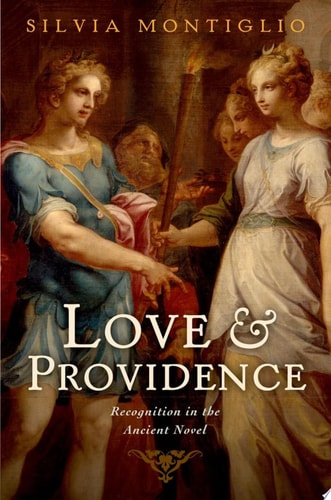
Love and Providence: Recognition in the Ancient Novel
0
0
As an Amazon Associate and affiliate partner, Menrva Books earns from qualifying purchases. Learn more
Author Description
From the Odyssey and King Lear to modern novels by Umberto Eco and John le Carré, the recognition scene has enjoyed a long life in western literature. It first became a regular feature of prose literature in the Greek novels of the first century CE. In these examples, it is the event that ensures the happy ending for the hero and heroine, and as such, it seems, was as pleasing for Greek readers as the canonical Hollywood kiss is for contemporary movie goers. Recognitions are particularly gratifying in the context of the ancient novels because the genre as a whole celebrates the idyllic social order to which the heroes and heroines belong and from which they have been harshly severed. In spite of their high frequency and thematic importance, novelistic recognitions have attracted little critical attention, especially in relation to epic and tragedy. With Love and Providence, Silvia Montiglio seeks to fill this gap. She begins by introducing the meaning of recognitions in the ancient novel both within the novels' narrative structure and thought world--that is, the values and ideals propounded in the narrative. She pursues these goals while examining novels by Chariton, Xenophon of Ephesus, Achilles Tatius, Longus, Heliodorus, Apuleius, and Petronius, as well as the Life of Apollonius of Tyre, the pseudo-Clementine recognitions, and the Jewish novel Joseph and Aseneth. In addition to addressing questions brought about by the recognitions--What does it mean for lovers to recognize each other at the end of their adventures? Is recognition the confirmation of sameness or an acknowledgement of change?--Montiglio addresses the rapport novelists entertain with their literary tradition, epic and drama. The book concludes by emphasizing the originality of the novels for the development of the recognition motif, and by explaining its influence in early-modern European literature.
Menrva's Summary
THE THESIS
This book investigates the function and evolution of the recognition scene within the ancient Greek and Roman novel, questioning how these moments of revelation serve both narrative structure and the moral values of the era. Silvia Montiglio, a scholar of classical literature, utilizes a comparative framework to analyze how these scenes bridge the gap between the protagonists' idyllic origins and their eventual restoration. By examining the interplay between the ancient novel and its predecessors in epic and tragedy, the author argues that recognition acts as a pivotal mechanism for confirming identity and social order in the face of prolonged separation.
THE SCOPE MAP
What You Will Find
- A comprehensive analysis of recognition motifs in works by Chariton, Xenophon of Ephesus, Achilles Tatius, Longus, Heliodorus, Apuleius, and Petronius.
- An examination of the influence of epic and tragic traditions on the development of prose narrative structures.
- A comparative study of the Life of Apollonius of Tyre, the pseudo-Clementine recognitions, and Joseph and Aseneth.
- A thematic exploration of how recognition scenes reflect values regarding sameness, change, and providence in ancient literature.
THE AUTHORITY PERSPECTIVE
Scholars and students of classical literature recognize this work as a significant contribution to the study of ancient narrative techniques. Readers frequently note the academic density of the prose, which provides a rigorous examination of the genre's structural evolution.
Page Count:
272
Publication Date:
2012-10-30
Publisher:
Oxford University Press
ISBN-10:
0199916047
ISBN-13:
9780199916047
Philosophy
Literary Criticism
Literature
Criticism history
Ancient History
Community Tags
Similar Books