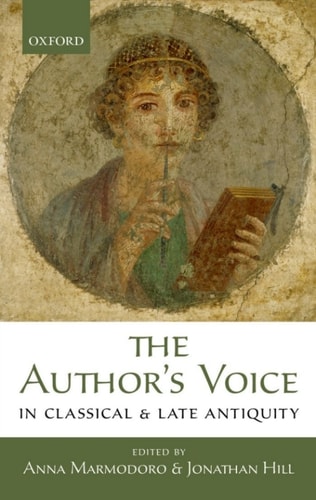
The Author's Voice in Classical and Late Antiquity
0
0
As an Amazon Associate and affiliate partner, Menrva Books earns from qualifying purchases. Learn more
Author Description
What significance does the voice or projected persona in which a text is written have for our understanding of the meaning of that text? This volume explores the persona of the author in antiquity, from Homer to late antiquity, taking into account both Latin and Greek authors from a range of disciplines. The thirteen chapters are divided into two main sections, the first of which focuses on the diverse forms of writing adopted by various ancient authors, and the different ways these forms were used to present and project an authorial voice. The second part of the volume considers questions regarding authority and ascription in relation to the authorial voice. In particular, it looks at how later readers - and later authors - may understand the authority of a text's author or supposed author. The volume contains chapters on pseudo-epigraphy and fictional letters, as well as the use of texts as authoritative in philosophical schools, and the ancient ascription of authorship to works of art.
Menrva's Summary
THE THESIS
This volume investigates how the projected persona or voice of an author in classical and late antiquity influences the interpretation and authority of their texts. Editors Anna Marmodoro and Jonathan Hill assemble a collection of scholarly contributions that examine the intersection of authorial identity, textual form, and reader reception. By analyzing a wide range of Greek and Latin works, the authors argue that the construction of an authorial voice was a deliberate rhetorical strategy used to establish credibility and manage the transmission of meaning across centuries.
THE SCOPE MAP
What You Will Find
- Analysis of authorial persona from Homeric epics through late antiquity.
- Examination of pseudo-epigraphy, fictional letters, and philosophical school texts.
- Discussion on the ascription of authorship to both literary works and visual art.
Scope Limits
- The volume does not provide an exhaustive survey of every ancient author but focuses on selected case studies.
- It does not cover modern theories of authorship beyond their application to ancient texts.
THE AUTHORITY PERSPECTIVE
Scholars and classicists identify this collection as a useful resource for understanding the complexities of ancient literary attribution and persona. Readers frequently note the academic density of the prose, which is intended for an audience familiar with classical philology and historical research.
Page Count:
448
Publication Date:
2013-01-01
Publisher:
OUP Oxford
ISBN-10:
0191649503
ISBN-13:
9780191649509
Philosophy
History
Ancient History
Philology
Literary Criticism
English
English & College Success
Community Tags
Similar Books