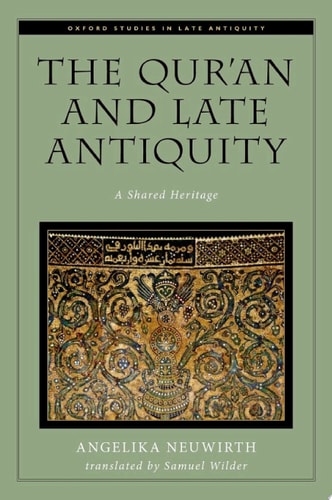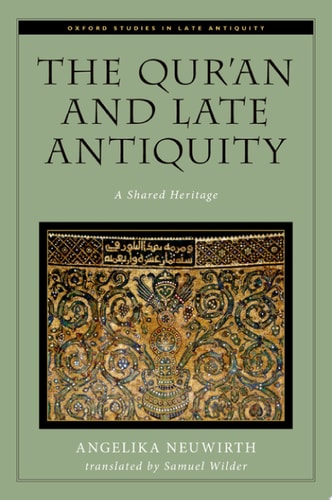
The Qur'an and Late Antiquity
0
0
As an Amazon Associate and affiliate partner, Menrva Books earns from qualifying purchases. Learn more
Author Description
In This Book, Angelika Neuwirth Provides A New Approach To Understanding The Founding Text Of Islam. Typical Exegesis Of The Qur'an Treats The Text Teleologically, As A Fait Accompli Finished Text, Or As A Replica Or Summary Of The Bible In Arabic. Instead Neuwirth Approaches The Qur'an As The Product Of A Specific Community In The Late Antique Arabian Peninsula, One Which Was Exposed To The Wider Worlds Of The Byzantine And Sasanian Empires, And To The Rich Intellectual Traditions Of Rabbinic Judaism, Early Christianity, And Gnosticism. A Central Goal Of The Book Is To Eliminate The Notion Of The Qur'an As Being A-historical. She Argues That It Is, In Fact, Highly Aware Of Its Place In Late Antiquity And Is Capable Of Yielding Valuable Historical Information. By Emphasizing The Liturgical Function Of The Qur'an, Neuwirth Allows Readers To See The Text As An Evolving Oral Tradition Within The Community Before It Became Collected And Codified As A Book. This Analysis Sheds Much Needed Light On The Development Of The Qur'an's Historical, Theological, And Political Outlook. The Book's Final Chapters Analyze The Relationship Of The Qur'an To The Bible, To Arabic Poetic Traditions, And, More Generally, To Late Antique Culture And Rhetorical Forms. By Providing A New Introduction To The Qur'an, One That Uniquely Challenges Current Ideas About Its Emergence And Development, The Qur'an And Late Antiquity Bridges The Gap Between Eastern And Western Approaches To This Sacred Text.
Menrva's Summary
THE THESIS
This book investigates the historical context of the Qur'an by challenging the notion that it is an a-historical text, instead positioning it as a product of the late antique Arabian Peninsula. Angelika Neuwirth, a distinguished scholar in Islamic studies, utilizes a methodology that moves away from teleological exegesis. She argues that the Qur'an reflects a community deeply engaged with the intellectual traditions of Rabbinic Judaism, early Christianity, and Gnosticism, while simultaneously interacting with the Byzantine and Sasanian empires. By treating the text as an evolving oral tradition rather than a static artifact, she provides a framework for understanding its development within its original cultural and political environment.
THE SCOPE MAP
What You Will Find
- Analysis of the Qur'an as a liturgical and oral tradition prior to codification.
- Comparative study of the Qur'an in relation to the Bible and Arabic poetic traditions.
- Examination of the intellectual and religious landscape of the late antique Arabian Peninsula.
- Methodological shift from static textual analysis to historical and rhetorical contextualization.
THE AUTHORITY PERSPECTIVE
Scholars and students of religious history frequently cite this work as a significant contribution to the field for its rigorous integration of historical context into Qur'anic studies. Experts highlight the text's academic density and its success in bridging the gap between Eastern and Western analytical approaches to sacred scripture.
Page Count:
848
Publication Date:
2019-01-01
Publisher:
Oxford University Press
ISBN-10:
0199928967
ISBN-13:
9780199928965
Religion
History
Islam
Late Antiquity
Theology
Community Tags
Similar Books