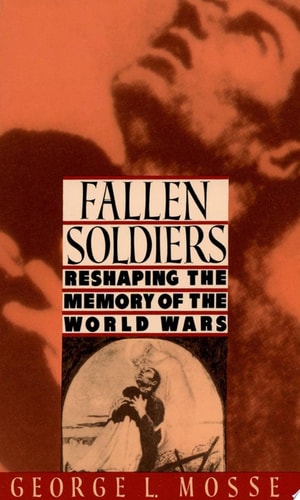
Fallen Soldiers: Reshaping the Memory of the World Wars
0
0
As an Amazon Associate and affiliate partner, Menrva Books earns from qualifying purchases. Learn more
Author Description
At the outbreak of the First World War, an entire generation of young men charged into battle for what they believed was a glorious cause. Over the next four years, that cause claimed the lives of some 13 million soldiers--more than twice the number killed in all the major wars from 1790 to 1914. But despite this devastating toll, the memory of the war was not, predominantly, of the grim reality of its trench warfare and battlefield carnage. What was most remembered by the war's participants was its sacredness and the martyrdom of those who had died for the greater glory of the fatherland. War, and the sanctification of it, is the subject of this pioneering work by well-known European historian George L. Mosse. Fallen Soldiers offers a profound analysis of what he calls the Myth of the War Experience--a vision of war that masks its horror, consecrates its memory, and ultimately justifies its purpose. Beginning with the Napoleonic wars, Mosse traces the origins of this myth and its symbols, and examines the role of war volunteers in creating and perpetuating it. But it was not until World War I, when Europeans confronted mass death on an unprecedented scale, that the myth gained its widest currency. Indeed, as Mosse makes clear, the need to find a higher meaning in the war became a national obsession. Focusing on Germany, with examples from England, France, and Italy, Mosse demonstrates how these nations--through memorials, monuments, and military cemeteries honoring the dead as martyrs--glorified the war and fostered a popular acceptance of it. He shows how the war was further promoted through a process of trivialization in which war toys and souvenirs, as well as postcards like those picturing the Easter Bunny on the Western Front, softened the war's image in the public mind. The Great War ended in 1918, but the Myth of the War Experience continued, achieving its most ruthless political effect in Germany in the interwar years. There the glorified notion of war play
Menrva's Summary
THE THESIS
How did European nations transform the unprecedented carnage of the World Wars into a sacred myth of martyrdom and national glory? George L. Mosse, a distinguished historian of European culture, investigates the psychological and political mechanisms used to sanitize mass death. By analyzing public memorials, military cemeteries, and popular culture, he argues that the 'Myth of the War Experience' was a deliberate construction designed to mask the horrors of trench warfare and justify the continued pursuit of nationalistic conflict.
THE SCOPE MAP
What You Will Find
- Historical analysis of the 'Myth of the War Experience' from the Napoleonic era through the interwar period.
- Examination of how war memorials, monuments, and cemeteries were utilized to frame fallen soldiers as martyrs.
- Case studies focusing primarily on Germany, with comparative evidence from England, France, and Italy.
- Investigation into the trivialization of war through consumer goods, postcards, and toys that softened the public perception of battlefield reality.
THE AUTHORITY PERSPECTIVE
Historians and scholars of cultural memory frequently cite this work as a foundational text for understanding the intersection of nationalism and the glorification of conflict. Readers often note the academic rigor of the prose and the clarity with which Mosse connects symbolic cultural artifacts to the rise of political extremism in the twentieth century.
Page Count:
276
Publication Date:
1991-01-01
Publisher:
Oxford University Press
ISBN-10:
0199923442
ISBN-13:
9780199923441
History
Military History
Cultural History
War
War and civilization
Sociology
European History
Europe civilization history
Community Tags
Similar Books